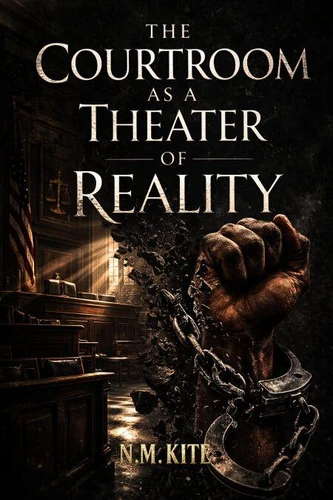
Courtrooms are built to produce answers, yet every answer depends on human judgment. Jurors interpret evidence, lawyers shape arguments, judges apply legal rules, and witnesses turn lived experience into testimony. Behind every verdict are questions about certainty, fairness, language, persuasion, emotion, morality, and the limits of legal decision making. The Courtroom as a Theater of Reality explores what happens when complex lives and disputed events are reduced to charges, instructions, testimony, and final rulings.
It asks whether justice can remain fair when facts are incomplete, people are unequal, and legal conclusions must still be reached. Rather than offering simple answers, the book challenges readers to look closely at how courts create authority, assign responsibility, and decide which version of reality will become law.
Courtrooms are built to produce answers, yet every answer depends on human judgment. Jurors interpret evidence, lawyers shape arguments, judges apply legal rules, and witnesses turn lived experience into testimony. Behind every verdict are questions about certainty, fairness, language, persuasion, emotion, morality, and the limits of legal decision making. The Courtroom as a Theater of Reality explores what happens when complex lives and disputed events are reduced to charges, instructions, testimony, and final rulings.
It asks whether justice can remain fair when facts are incomplete, people are unequal, and legal conclusions must still be reached. Rather than offering simple answers, the book challenges readers to look closely at how courts create authority, assign responsibility, and decide which version of reality will become law.


 , qui est-ce ?