SOLDES
Jusqu'à -70% sur une sélection d'articles*

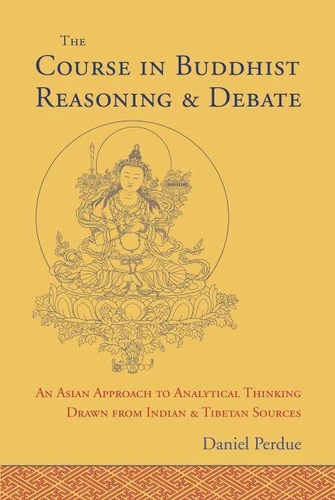
The Course in Buddhist Reasoning and Debate. An Asian Approach to Analytical Thinking Drawn from Indian and Tibetan Sources
Par :Formats :
Disponible dans votre compte client Decitre ou Furet du Nord dès validation de votre commande. Le format ePub protégé est :
- Compatible avec une lecture sur My Vivlio (smartphone, tablette, ordinateur)
- Compatible avec une lecture sur liseuses Vivlio
- Pour les liseuses autres que Vivlio, vous devez utiliser le logiciel Adobe Digital Edition. Non compatible avec la lecture sur les liseuses Kindle, Remarkable et Sony
- Non compatible avec un achat hors France métropolitaine
 , qui est-ce ?
Notre partenaire de plateforme de lecture numérique où vous retrouverez l'ensemble de vos ebooks gratuitement
Pour en savoir plus sur nos ebooks, consultez notre aide en ligne ici
C'est si simple ! Lisez votre ebook avec l'app Vivlio sur votre tablette, mobile ou ordinateur :

- Nombre de pages544
- FormatePub
- ISBN978-0-8348-2955-8
- EAN9780834829558
- Date de parution27/05/2014
- Protection num.Adobe DRM
- Taille7 Mo
- Infos supplémentairesepub
- ÉditeurSnow Lion
Résumé
Buddhism is a wisdom tradition. It asserts that we are liberated by the power of our own understanding. The three purposes of Buddhist debate are to defeat your own and others' misconceptions, to establish your own correct view, and to clear away objections to your view. It is like the approach of a physician-to remove what does not belong and to strengthen what does. Thus, for Buddhists, reasoning and debate are not ends in themselves or idle intellectual speculation.
Rather, they are used as one path to spiritual wellness, taking practitioners closer to the health of liberation through these efforts to remove mistaken views and to understand and strengthen correct ones. Reading and memorization are not enough. Students must be able to verbalize their understanding and defend it under the pressure of cross-examination. This book teaches the basic analytical skills and procedures used in Buddhist debate.
It is based on the author's own practice and experiences gained in the debating courtyards of Tibetan monasteries in India and matured through years of leading popular university courses on the subject. Sample debate exchanges show readers how to get started with the Buddhist style of analytical thinking to challenge and defend assertions. Learning is supported by guided reflections, practical advice, and verbal exercises to be completed in practice with a partner.
By the end of the course, readers will be able to engage in unscripted, full-fledged debates with a qualified partner about Buddhist characterizations and classifications of phenomena using the format and procedures of Buddhist debate. Moreover, these skills, once mastered, can then be applied to investigating the truth and falsity of views in any other subject.
Rather, they are used as one path to spiritual wellness, taking practitioners closer to the health of liberation through these efforts to remove mistaken views and to understand and strengthen correct ones. Reading and memorization are not enough. Students must be able to verbalize their understanding and defend it under the pressure of cross-examination. This book teaches the basic analytical skills and procedures used in Buddhist debate.
It is based on the author's own practice and experiences gained in the debating courtyards of Tibetan monasteries in India and matured through years of leading popular university courses on the subject. Sample debate exchanges show readers how to get started with the Buddhist style of analytical thinking to challenge and defend assertions. Learning is supported by guided reflections, practical advice, and verbal exercises to be completed in practice with a partner.
By the end of the course, readers will be able to engage in unscripted, full-fledged debates with a qualified partner about Buddhist characterizations and classifications of phenomena using the format and procedures of Buddhist debate. Moreover, these skills, once mastered, can then be applied to investigating the truth and falsity of views in any other subject.