Every great collapse begins with something small. A mighty tree does not fall because of one powerful gust of wind. Long before it crashes to the ground, decay has been quietly working beneath its bark. A magnificent building does not crumble because of one crack. The damage begins with a weakness that is ignored until it can no longer support the weight it carries. In much the same way, spiritual compromise rarely begins with a dramatic decision to abandon God.
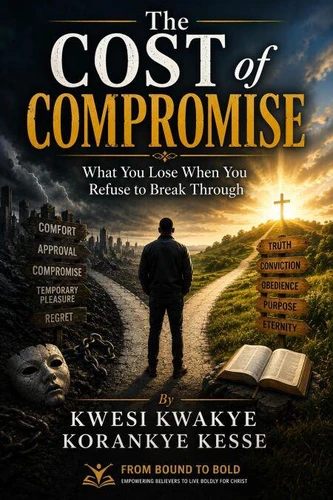
It begins with small concessions, ignored convictions, delayed obedience, and choices that seem harmless at the time. This is why to compromise is dangerous. It seldom announces itself. It does not arrive as an obvious enemy. Instead, it often disguises itself as wisdom, convenience, tolerance, ambition, or self-preservation. It whispers that one small exception will not matter, that one delayed act of obedience will have no lasting consequences, or that adjusting God's standards to fit present circumstances is both reasonable and harmless.
Yet Scripture tells a different story. Throughout the Bible, we see the devastating effects of compromise. We see individuals who exchanged God's best for temporary satisfaction. We witness leaders who gradually drifted from wholehearted devotion. We observe nations that slowly abandoned God's commands until they experienced the painful consequences of their choices. At the same time, we also encounter men and women who refused to compromise.
Though they faced opposition, rejection, suffering, and uncertainty, they remained faithful, and their lives became powerful testimonies of God's sustaining grace. The difference between these two groups was not intelligence, opportunity, or ability. It was conviction. Conviction is the inner certainty that God's truth is worth obeying regardless of the cost. It enables believers to remain faithful when compromise appears easier, to choose obedience when convenience offers another path, and to trust God's promises when circumstances encourage doubt.
Conviction anchors the soul, guards the heart, and preserves the believer's relationship with God. Sadly, we live in a generation where compromise is often celebrated rather than challenged. Moral boundaries continue to shift. Truth is increasingly treated as a matter of personal preference rather than divine authority. Success is frequently measured by popularity instead of faithfulness. Even within the Church, there is growing pressure to soften biblical truth in order to gain acceptance from the surrounding culture.
The result is not merely a change in behaviour. It is the gradual erosion of spiritual conviction. When conviction weakens, prayer loses its urgency. Worship becomes routine. Holiness appears optional. Sin becomes easier to justify. The voice of the Holy Spirit grows quieter beneath the noise of competing influences. Eventually, many believers find themselves living far below the abundant life that Christ intended, not because they rejected Him completely, but because compromise quietly stole what wholehearted obedience would have preserved.
This book was written to expose that danger. It is also written to proclaim hope. No matter how far compromise has weakened your convictions, God's grace is able to restore them. No failure is beyond His mercy. No heart is beyond His power to renew. Throughout these chapters, we will examine how compromise begins, why it grows, how it affects every area of the believer's life, and, most importantly, how it can be overcome through the transforming power of God's Word and the Holy Spirit.
You will discover that God's call has never changed. He still calls His people to holiness in an unholy world, courage in fearful times, truth in an age of confusion, and unwavering faithfulness in a culture that often rewards compromise. His standards remain unchanged because His character never changes.
Every great collapse begins with something small. A mighty tree does not fall because of one powerful gust of wind. Long before it crashes to the ground, decay has been quietly working beneath its bark. A magnificent building does not crumble because of one crack. The damage begins with a weakness that is ignored until it can no longer support the weight it carries. In much the same way, spiritual compromise rarely begins with a dramatic decision to abandon God.
It begins with small concessions, ignored convictions, delayed obedience, and choices that seem harmless at the time. This is why to compromise is dangerous. It seldom announces itself. It does not arrive as an obvious enemy. Instead, it often disguises itself as wisdom, convenience, tolerance, ambition, or self-preservation. It whispers that one small exception will not matter, that one delayed act of obedience will have no lasting consequences, or that adjusting God's standards to fit present circumstances is both reasonable and harmless.
Yet Scripture tells a different story. Throughout the Bible, we see the devastating effects of compromise. We see individuals who exchanged God's best for temporary satisfaction. We witness leaders who gradually drifted from wholehearted devotion. We observe nations that slowly abandoned God's commands until they experienced the painful consequences of their choices. At the same time, we also encounter men and women who refused to compromise.
Though they faced opposition, rejection, suffering, and uncertainty, they remained faithful, and their lives became powerful testimonies of God's sustaining grace. The difference between these two groups was not intelligence, opportunity, or ability. It was conviction. Conviction is the inner certainty that God's truth is worth obeying regardless of the cost. It enables believers to remain faithful when compromise appears easier, to choose obedience when convenience offers another path, and to trust God's promises when circumstances encourage doubt.
Conviction anchors the soul, guards the heart, and preserves the believer's relationship with God. Sadly, we live in a generation where compromise is often celebrated rather than challenged. Moral boundaries continue to shift. Truth is increasingly treated as a matter of personal preference rather than divine authority. Success is frequently measured by popularity instead of faithfulness. Even within the Church, there is growing pressure to soften biblical truth in order to gain acceptance from the surrounding culture.
The result is not merely a change in behaviour. It is the gradual erosion of spiritual conviction. When conviction weakens, prayer loses its urgency. Worship becomes routine. Holiness appears optional. Sin becomes easier to justify. The voice of the Holy Spirit grows quieter beneath the noise of competing influences. Eventually, many believers find themselves living far below the abundant life that Christ intended, not because they rejected Him completely, but because compromise quietly stole what wholehearted obedience would have preserved.
This book was written to expose that danger. It is also written to proclaim hope. No matter how far compromise has weakened your convictions, God's grace is able to restore them. No failure is beyond His mercy. No heart is beyond His power to renew. Throughout these chapters, we will examine how compromise begins, why it grows, how it affects every area of the believer's life, and, most importantly, how it can be overcome through the transforming power of God's Word and the Holy Spirit.
You will discover that God's call has never changed. He still calls His people to holiness in an unholy world, courage in fearful times, truth in an age of confusion, and unwavering faithfulness in a culture that often rewards compromise. His standards remain unchanged because His character never changes.