David McDuff's translations for Penguin Classics include Dostoyevsky's Crime and Punishment, The Brothers Karamazov and The Idiot, and Babel's short stories.
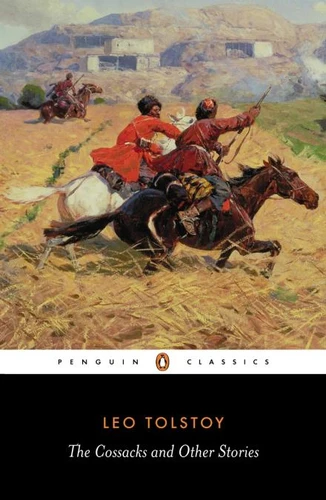
The Cossacks and Other Stories
Par : , ,Formats :
Disponible dans votre compte client Decitre ou Furet du Nord dès validation de votre commande. Le format ePub protégé est :
- Compatible avec une lecture sur My Vivlio (smartphone, tablette, ordinateur)
- Compatible avec une lecture sur liseuses Vivlio
- Pour les liseuses autres que Vivlio, vous devez utiliser le logiciel Adobe Digital Edition. Non compatible avec la lecture sur les liseuses Kindle, Remarkable et Sony
- Non compatible avec un achat hors France métropolitaine
 , qui est-ce ?
Notre partenaire de plateforme de lecture numérique où vous retrouverez l'ensemble de vos ebooks gratuitement
Pour en savoir plus sur nos ebooks, consultez notre aide en ligne ici
C'est si simple ! Lisez votre ebook avec l'app Vivlio sur votre tablette, mobile ou ordinateur :

- Nombre de pages528
- FormatePub
- ISBN0-14-192687-2
- EAN9780141926872
- Date de parution28/09/2006
- Protection num.Adobe DRM
- Infos supplémentairesepub
- ÉditeurPENGUIN
Résumé
In 1851, at the age of twenty-two, Tolstoy joined the Russian army and travelled to the Caucasus as a soldier. The four years that followed were among the most significant in his life, and deeply influenced the stories collected here. Begun in 1852 but unfinished for a decade, The Cossacks describes the experiences of Olenin, a young cultured Russian who comes to despise civilization after spending time with the wild Cossack people.
Sevastopol Sketches, based on Tolstoy's own experiences of the siege of Sevastopol in 1854-55, is a compelling consideration of the nature of war, while Hadji Murat, written towards the end of his life, returns to the Caucasus of Tolstoy's youth to explore the life of a great leader torn apart by a conflict of loyalties. Written at the end of the nineteenth century, it is amongst the last and greatest of Tolstoy's shorter works.
Sevastopol Sketches, based on Tolstoy's own experiences of the siege of Sevastopol in 1854-55, is a compelling consideration of the nature of war, while Hadji Murat, written towards the end of his life, returns to the Caucasus of Tolstoy's youth to explore the life of a great leader torn apart by a conflict of loyalties. Written at the end of the nineteenth century, it is amongst the last and greatest of Tolstoy's shorter works.
A propos de Leo Tolstoy

3,99 €
War and Peace
E-book
1,99 €
0,99 €

Anna Karenina
E-book
3,99 €
Family happiness
E-book
2,99 €
Hadji Murad
E-book
1,99 €
1,99 €

The death of Ivan Ilych
E-book
1,99 €
The Devil
E-book
1,99 €
Kaukasische vertellingen
E-book
9,99 €
Anna Karenina, 1. Band
E-book
9,99 €
Anna Karenina, 2. Band
E-book
9,99 €
Herr und Knecht: Novelle
E-book
9,99 €
9,99 €