SOLDES
Jusqu'à -70% sur une sélection d'articles*
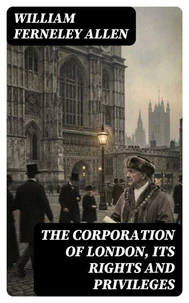
The Corporation of London, Its Rights and Privileges. Unveiling the Legacy of London's Corporate Governance
Par :Formats :
Disponible dans votre compte client Decitre ou Furet du Nord dès validation de votre commande. Le format ePub est :
- Compatible avec une lecture sur My Vivlio (smartphone, tablette, ordinateur)
- Compatible avec une lecture sur liseuses Vivlio
- Pour les liseuses autres que Vivlio, vous devez utiliser le logiciel Adobe Digital Edition. Non compatible avec la lecture sur les liseuses Kindle, Remarkable et Sony
 , qui est-ce ?
Notre partenaire de plateforme de lecture numérique où vous retrouverez l'ensemble de vos ebooks gratuitement
Pour en savoir plus sur nos ebooks, consultez notre aide en ligne ici
C'est si simple ! Lisez votre ebook avec l'app Vivlio sur votre tablette, mobile ou ordinateur :

- Nombre de pages137
- FormatePub
- ISBN406-4-06-619964-7
- EAN4064066199647
- Date de parution11/12/2019
- Protection num.Digital Watermarking
- Taille438 Ko
- Infos supplémentairesepub
- ÉditeurGOOD PRESS
Résumé
In "The Corporation of London, Its Rights and Privileges, " William Ferneley Allen delves into the intricate legal and historical fabric surrounding the governance of one of the world's most iconic cities. Employing a meticulous scholarly approach, Allen examines the evolution of London's corporation, articulating its foundational rights, privileges, and responsibilities through rich historical narratives and legal documents.
The book is characterized by a clear, authoritative style that seeks to demystify the often-complex relationships between civic authority, trade, and legislative power in a rapidly modernizing society, effectively situating it within the broader context of 19th-century British legal discourse. William Ferneley Allen was a prominent legal scholar and historian deeply engaged with the complexities of municipal law and its historical implications.
His background, rooted in both legal practice and academic inquiry, fueled his interest in the Corporation of London as a case study in administrative evolution. Allen'Äôs insights are informed by the socio-political climate of his time, which saw the increasing scrutiny of traditional institutions and their role in contemporary governance, making his analysis timely and relevant. This work is essential reading for scholars of urban studies, legal history, and governance.
Allen's thorough investigations not only illuminate the unique characteristics of London'Äôs corporation but also provoke critical thought regarding the balance of power within modern city governance. Those interested in the historical underpinnings of contemporary civic structures will find profound insights in this meticulously crafted text.
The book is characterized by a clear, authoritative style that seeks to demystify the often-complex relationships between civic authority, trade, and legislative power in a rapidly modernizing society, effectively situating it within the broader context of 19th-century British legal discourse. William Ferneley Allen was a prominent legal scholar and historian deeply engaged with the complexities of municipal law and its historical implications.
His background, rooted in both legal practice and academic inquiry, fueled his interest in the Corporation of London as a case study in administrative evolution. Allen'Äôs insights are informed by the socio-political climate of his time, which saw the increasing scrutiny of traditional institutions and their role in contemporary governance, making his analysis timely and relevant. This work is essential reading for scholars of urban studies, legal history, and governance.
Allen's thorough investigations not only illuminate the unique characteristics of London'Äôs corporation but also provoke critical thought regarding the balance of power within modern city governance. Those interested in the historical underpinnings of contemporary civic structures will find profound insights in this meticulously crafted text.