SOLDES
Jusqu'à -70% sur une sélection d'articles*

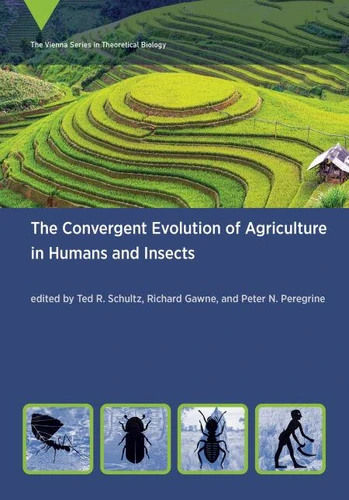
The Convergent Evolution of Agriculture in Humans and Insects
Par : , ,Formats :
Disponible dans votre compte client Decitre ou Furet du Nord dès validation de votre commande. Le format ePub protégé est :
- Compatible avec une lecture sur My Vivlio (smartphone, tablette, ordinateur)
- Compatible avec une lecture sur liseuses Vivlio
- Pour les liseuses autres que Vivlio, vous devez utiliser le logiciel Adobe Digital Edition. Non compatible avec la lecture sur les liseuses Kindle, Remarkable et Sony
- Non compatible avec un achat hors France métropolitaine
 , qui est-ce ?
Notre partenaire de plateforme de lecture numérique où vous retrouverez l'ensemble de vos ebooks gratuitement
Pour en savoir plus sur nos ebooks, consultez notre aide en ligne ici
C'est si simple ! Lisez votre ebook avec l'app Vivlio sur votre tablette, mobile ou ordinateur :

- Nombre de pages338
- FormatePub
- ISBN978-0-262-36756-1
- EAN9780262367561
- Date de parution15/02/2022
- Protection num.Adobe DRM
- Taille42 Mo
- Infos supplémentairesepub
- ÉditeurThe MIT Press
Résumé
Contributors explore common elements in the evolutionary histories of both human and insect agriculture resulting from convergent evolution. During the past 12, 000 years, agriculture originated in humans as many as twenty-three times, and during the past 65 million years, agriculture also originated in nonhuman animals at least twenty times and in insects at least fifteen times. It is much more likely that these independent origins represent similar solutions to the challenge of growing food than that they are due purely to chance.
This volume seeks to identify common elements in the evolutionary histories of both human and insect agriculture that are the results of convergent evolution. The goal is to create a new, synthetic field that characterizes, quantifies, and empirically documents the evolutionary and ecological mechanisms that drive both human and nonhuman agriculture. The contributors report on the results of quantitative analyses comparing human and nonhuman agriculture; discuss evolutionary conflicts of interest between and among farmers and cultivars and how they interfere with efficiencies of agricultural symbiosis; describe in detail agriculture in termites, ambrosia beetles, and ants; and consider patterns of evolutionary convergence in different aspects of agriculture, comparing fungal parasites of ant agriculture with fungal parasites of human agriculture, analyzing the effects of agriculture on human anatomy, and tracing the similarities and differences between the evolution of agriculture in humans and in a single, relatively well-studied insect group, fungus-farming ants.
This volume seeks to identify common elements in the evolutionary histories of both human and insect agriculture that are the results of convergent evolution. The goal is to create a new, synthetic field that characterizes, quantifies, and empirically documents the evolutionary and ecological mechanisms that drive both human and nonhuman agriculture. The contributors report on the results of quantitative analyses comparing human and nonhuman agriculture; discuss evolutionary conflicts of interest between and among farmers and cultivars and how they interfere with efficiencies of agricultural symbiosis; describe in detail agriculture in termites, ambrosia beetles, and ants; and consider patterns of evolutionary convergence in different aspects of agriculture, comparing fungal parasites of ant agriculture with fungal parasites of human agriculture, analyzing the effects of agriculture on human anatomy, and tracing the similarities and differences between the evolution of agriculture in humans and in a single, relatively well-studied insect group, fungus-farming ants.