SOLDES
Jusqu'à -70% sur une sélection d'articles*

Nouveauté
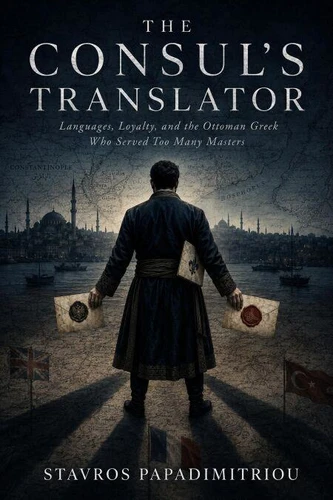
The Consul's Translator: Languages, Loyalty, and the Ottoman Greek Who Served Too Many Masters
Par :Formats :
Disponible dans votre compte client Decitre ou Furet du Nord dès validation de votre commande. Le format ePub est :
- Compatible avec une lecture sur My Vivlio (smartphone, tablette, ordinateur)
- Compatible avec une lecture sur liseuses Vivlio
- Pour les liseuses autres que Vivlio, vous devez utiliser le logiciel Adobe Digital Edition. Non compatible avec la lecture sur les liseuses Kindle, Remarkable et Sony
 , qui est-ce ?
Notre partenaire de plateforme de lecture numérique où vous retrouverez l'ensemble de vos ebooks gratuitement
Pour en savoir plus sur nos ebooks, consultez notre aide en ligne ici
C'est si simple ! Lisez votre ebook avec l'app Vivlio sur votre tablette, mobile ou ordinateur :

- FormatePub
- ISBN8235463868
- EAN9798235463868
- Date de parution25/05/2026
- Protection num.pas de protection
- Infos supplémentairesepub
- ÉditeurIoakim Ioakim
Résumé
Constantinople, 1820. The largest city in the world hums with the particular tension of an empire that senses, in its bones, that something is coming. Stavros Papadimitriou translates for a living. In three languages, for three employers, inside one of the most surveilled and dangerous cities on earth. Every morning he walks to the Ottoman Sublime Porte and renders the Sultan's correspondence into French and English with flawless precision.
Every afternoon he sits across from the British consul and explains, in terms no dictionary could supply, how the Ottoman mind actually works. And sometimes, in the evenings, he does quiet work for the French. None of his three employers knows the full extent of what he does for the others. For nine years, this arrangement has held. Then 1821 arrives, and with it a revolution. The Greeks of the Peloponnese rise against Ottoman rule in one of history's most consequential uprisings.
In Constantinople, the response is immediate and brutal. Churches are shuttered. Greeks are arrested in the streets. The Ecumenical Patriarch is hanged at his own gate on Easter Sunday. And Stavros Papadimitriou, a Greek man employed by the empire now suppressing his own people, is handed a document that will test everything he has ever believed about loyalty, language, and the price of survival. He must translate it accurately.
The consequences if he does not are fatal. The consequences if he does may be worse. This is the story of a man who lived at the exact intersection of three civilizations during the seven most dangerous years of the nineteenth century. Not a spy, not a hero, not a traitor. Something harder to name and far harder to judge: a professional who discovered that his profession had placed him in the middle of a moral emergency for which no professional training exists.
What makes this book impossible to put down is not the historical drama, though the drama is extraordinary. It is the intimacy of the dilemma. Every choice Stavros makes is one that any thoughtful reader, honest with themselves, would struggle to make differently. He protects one friend at great personal risk. He allows forty others to remain in danger because saving them would destroy him. He adjusts seven words in an English translation and never knows, for the rest of his life, whether those seven words mattered.
He knows what is right. He knows what is possible. And he lives, for seven years, in the precise gap between those two things. Set against the documented history of the Greek War of Independence, the Phanariot dragoman tradition, and the intrigues of the Ottoman court, this book moves with the pace of a thriller and the depth of the finest narrative nonfiction. The coffeehouses of the Phanar, the gilded rooms of the British consulate, the cold corridors of the Sublime Porte, the streets of a city suddenly turned hostile to the people who built it: every setting is rendered with the precision of deep research and the vividness of fully inhabited imagination.
The Greek dragomans were among the most important figures of the Ottoman centuries and among the least remembered. They translated the words that moved empires, shaped treaties, and determined the fates of communities. They left almost nothing behind, because leaving things behind was a luxury their position did not permit. This book is their testament. And Stavros Papadimitriou is the man who finally speaks for them.
For readers of Erik Larson, Ben Macintyre, and Simon Sebag Montefiore. For anyone who has ever been caught between two worlds and discovered that the hardest thing is not choosing between them, but continuing to live inside the impossibility of both. Some stories demand to be told. Some silences, finally, demand to be broken. This is one of them.
Every afternoon he sits across from the British consul and explains, in terms no dictionary could supply, how the Ottoman mind actually works. And sometimes, in the evenings, he does quiet work for the French. None of his three employers knows the full extent of what he does for the others. For nine years, this arrangement has held. Then 1821 arrives, and with it a revolution. The Greeks of the Peloponnese rise against Ottoman rule in one of history's most consequential uprisings.
In Constantinople, the response is immediate and brutal. Churches are shuttered. Greeks are arrested in the streets. The Ecumenical Patriarch is hanged at his own gate on Easter Sunday. And Stavros Papadimitriou, a Greek man employed by the empire now suppressing his own people, is handed a document that will test everything he has ever believed about loyalty, language, and the price of survival. He must translate it accurately.
The consequences if he does not are fatal. The consequences if he does may be worse. This is the story of a man who lived at the exact intersection of three civilizations during the seven most dangerous years of the nineteenth century. Not a spy, not a hero, not a traitor. Something harder to name and far harder to judge: a professional who discovered that his profession had placed him in the middle of a moral emergency for which no professional training exists.
What makes this book impossible to put down is not the historical drama, though the drama is extraordinary. It is the intimacy of the dilemma. Every choice Stavros makes is one that any thoughtful reader, honest with themselves, would struggle to make differently. He protects one friend at great personal risk. He allows forty others to remain in danger because saving them would destroy him. He adjusts seven words in an English translation and never knows, for the rest of his life, whether those seven words mattered.
He knows what is right. He knows what is possible. And he lives, for seven years, in the precise gap between those two things. Set against the documented history of the Greek War of Independence, the Phanariot dragoman tradition, and the intrigues of the Ottoman court, this book moves with the pace of a thriller and the depth of the finest narrative nonfiction. The coffeehouses of the Phanar, the gilded rooms of the British consulate, the cold corridors of the Sublime Porte, the streets of a city suddenly turned hostile to the people who built it: every setting is rendered with the precision of deep research and the vividness of fully inhabited imagination.
The Greek dragomans were among the most important figures of the Ottoman centuries and among the least remembered. They translated the words that moved empires, shaped treaties, and determined the fates of communities. They left almost nothing behind, because leaving things behind was a luxury their position did not permit. This book is their testament. And Stavros Papadimitriou is the man who finally speaks for them.
For readers of Erik Larson, Ben Macintyre, and Simon Sebag Montefiore. For anyone who has ever been caught between two worlds and discovered that the hardest thing is not choosing between them, but continuing to live inside the impossibility of both. Some stories demand to be told. Some silences, finally, demand to be broken. This is one of them.