SOLDES
Jusqu'à -70% sur une sélection d'articles*

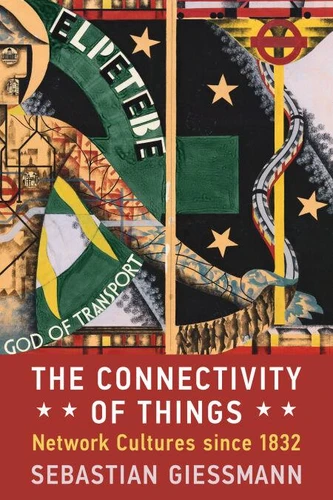
The Connectivity of Things. Network Cultures since 1832
Par :Formats :
Disponible dans votre compte client Decitre ou Furet du Nord dès validation de votre commande. Le format ePub protégé est :
- Compatible avec une lecture sur My Vivlio (smartphone, tablette, ordinateur)
- Compatible avec une lecture sur liseuses Vivlio
- Pour les liseuses autres que Vivlio, vous devez utiliser le logiciel Adobe Digital Edition. Non compatible avec la lecture sur les liseuses Kindle, Remarkable et Sony
- Non compatible avec un achat hors France métropolitaine
 , qui est-ce ?
Notre partenaire de plateforme de lecture numérique où vous retrouverez l'ensemble de vos ebooks gratuitement
Pour en savoir plus sur nos ebooks, consultez notre aide en ligne ici
C'est si simple ! Lisez votre ebook avec l'app Vivlio sur votre tablette, mobile ou ordinateur :

- Nombre de pages444
- FormatePub
- ISBN978-0-262-38108-6
- EAN9780262381086
- Date de parution15/10/2024
- Protection num.Adobe DRM
- Taille101 Mo
- Infos supplémentairesepub
- ÉditeurThe MIT Press
Résumé
A media history of the material and infrastructural features of networking practices, a German classic translated for the first time into English. Nets hold, connect, and catch. They ensnare, bind, and entangle. Our social networks owe their name to a conceivably strange and ambivalent object. But how did the net get into the network? And how can it reasonably represent the connectedness of people, things, institutions, signs, infrastructures, and even nature? The Connectivity of Things by Sebastian Giessmann, the first media history that addresses the overwhelming diversity of networks, attempts to answer all these questions and more.
Reconstructing the decisive moments in which networking turned into a veritable cultural technique, Giessmann takes readers below the street to the Parisian sewers and to the Suez Canal, into the telephone exchanges of Northeast America, and on to the London Underground. His brilliant history explains why social networks were discovered late, how the rapid rise of mathematical network theory was able to take place, how improbable the invention of the internet was, and even what diagrams and conspiracy theories have to do with it all.
A primer on networking as a cultural technique, this translated German classic explains everything one ever could wish to know about networks.
Reconstructing the decisive moments in which networking turned into a veritable cultural technique, Giessmann takes readers below the street to the Parisian sewers and to the Suez Canal, into the telephone exchanges of Northeast America, and on to the London Underground. His brilliant history explains why social networks were discovered late, how the rapid rise of mathematical network theory was able to take place, how improbable the invention of the internet was, and even what diagrams and conspiracy theories have to do with it all.
A primer on networking as a cultural technique, this translated German classic explains everything one ever could wish to know about networks.