
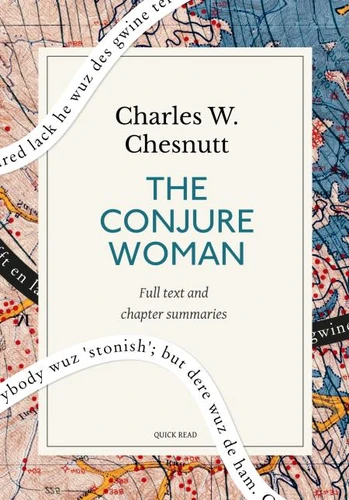
The Conjure Woman: A Quick Read edition
Par : ,Formats :
Disponible dans votre compte client Decitre ou Furet du Nord dès validation de votre commande. Le format Multi-format est :
- Pour les liseuses autres que Vivlio, vous devez utiliser le logiciel Adobe Digital Edition. Non compatible avec la lecture sur les liseuses Kindle, Remarkable et Sony
 , qui est-ce ?
Notre partenaire de plateforme de lecture numérique où vous retrouverez l'ensemble de vos ebooks gratuitement
Pour en savoir plus sur nos ebooks, consultez notre aide en ligne ici
C'est si simple ! Lisez votre ebook avec l'app Vivlio sur votre tablette, mobile ou ordinateur :

- FormatMulti-format
- ISBN978-2-38582-230-9
- EAN9782385822309
- Date de parution20/02/2024
- Protection num.pas de protection
- Infos supplémentairesMulti-Format
- ÉditeurQuick Read
Résumé
Discover a new way to read classics with Quick Read.
This Quick Read edition includes both the full text and a summary for each chapter.
- Reading time of the complete text: about 5 hours
- Reading time of the summarized text: 8 minutes
"The Conjure Woman" is a collection of short stories written by Charles W. Chesnutt, an African-American fiction writer and activist. Published in 1899, it is considered a significant work of African-American literature.
The stories are set in Patesville, North Carolina, and revolve around a white Northerner named John and his interactions with Uncle Julius McAdoo, an ex-slave who serves as a trickster figure and storyteller. Each story features a conjurer and explores themes of African American folklore and hoodoo conjuring traditions. Chesnutt's storytelling subverts popular racial stereotypes and condemns the plantation regime.
The collection received positive reviews and was adapted into a silent film in 1926.
The stories are set in Patesville, North Carolina, and revolve around a white Northerner named John and his interactions with Uncle Julius McAdoo, an ex-slave who serves as a trickster figure and storyteller. Each story features a conjurer and explores themes of African American folklore and hoodoo conjuring traditions. Chesnutt's storytelling subverts popular racial stereotypes and condemns the plantation regime.
The collection received positive reviews and was adapted into a silent film in 1926.
A propos de Quick Read

4,99 €
4,99 €
4,99 €
4,99 €
4,99 €
4,99 €
4,99 €
4,99 €
4,99 €
4,99 €
4,99 €
4,99 €
4,99 €
4,99 €
4,99 €