
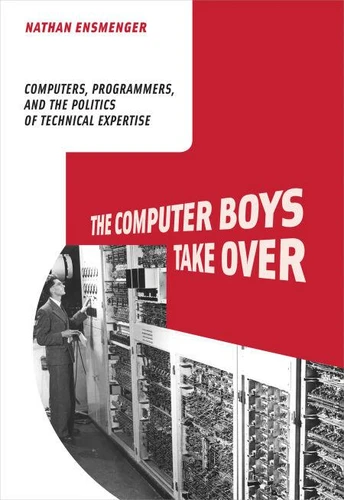
The Computer Boys Take Over. Computers, Programmers, and the Politics of Technical Expertise
Par :Formats :
Disponible dans votre compte client Decitre ou Furet du Nord dès validation de votre commande. Le format ePub protégé est :
- Compatible avec une lecture sur My Vivlio (smartphone, tablette, ordinateur)
- Compatible avec une lecture sur liseuses Vivlio
- Pour les liseuses autres que Vivlio, vous devez utiliser le logiciel Adobe Digital Edition. Non compatible avec la lecture sur les liseuses Kindle, Remarkable et Sony
- Non compatible avec un achat hors France métropolitaine
 , qui est-ce ?
Notre partenaire de plateforme de lecture numérique où vous retrouverez l'ensemble de vos ebooks gratuitement
Pour en savoir plus sur nos ebooks, consultez notre aide en ligne ici
C'est si simple ! Lisez votre ebook avec l'app Vivlio sur votre tablette, mobile ou ordinateur :

- Nombre de pages336
- FormatePub
- ISBN978-0-262-30282-1
- EAN9780262302821
- Date de parution24/08/2012
- Protection num.Adobe DRM
- Taille4 Mo
- Infos supplémentairesepub
- ÉditeurThe MIT Press
Résumé
The contentious history of the computer programmers who developed the software that made the computer revolution possible. This is a book about the computer revolution of the mid-twentieth century and the people who made it possible. Unlike most histories of computing, it is not a book about machines, inventors, or entrepreneurs. Instead, it tells the story of the vast but largely anonymous legions of computer specialists-programmers, systems analysts, and other software developers-who transformed the electronic computer from a scientific curiosity into the defining technology of the modern era.
As the systems that they built became increasingly powerful and ubiquitous, these specialists became the focus of a series of critiques of the social and organizational impact of electronic computing. To many of their contemporaries, it seemed the "computer boys" were taking over, not just in the corporate setting, but also in government, politics, and society in general. In The Computer Boys Take Over, Nathan Ensmenger traces the rise to power of the computer expert in modern American society.
His rich and nuanced portrayal of the men and women (a surprising number of the "computer boys" were, in fact, female) who built their careers around the novel technology of electronic computing explores issues of power, identity, and expertise that have only become more significant in our increasingly computerized society. In his recasting of the drama of the computer revolution through the eyes of its principle revolutionaries, Ensmenger reminds us that the computerization of modern society was not an inevitable process driven by impersonal technological or economic imperatives, but was rather a creative, contentious, and above all, fundamentally human development.
As the systems that they built became increasingly powerful and ubiquitous, these specialists became the focus of a series of critiques of the social and organizational impact of electronic computing. To many of their contemporaries, it seemed the "computer boys" were taking over, not just in the corporate setting, but also in government, politics, and society in general. In The Computer Boys Take Over, Nathan Ensmenger traces the rise to power of the computer expert in modern American society.
His rich and nuanced portrayal of the men and women (a surprising number of the "computer boys" were, in fact, female) who built their careers around the novel technology of electronic computing explores issues of power, identity, and expertise that have only become more significant in our increasingly computerized society. In his recasting of the drama of the computer revolution through the eyes of its principle revolutionaries, Ensmenger reminds us that the computerization of modern society was not an inevitable process driven by impersonal technological or economic imperatives, but was rather a creative, contentious, and above all, fundamentally human development.