
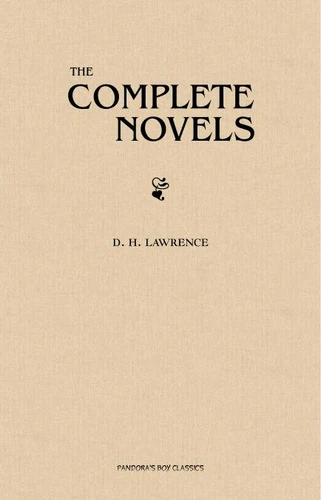
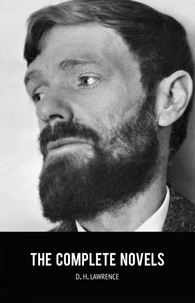
The Complete Novels of D. H. Lawrence
Par :Formats :
Disponible dans votre compte client Decitre ou Furet du Nord dès validation de votre commande. Le format ePub est :
- Compatible avec une lecture sur My Vivlio (smartphone, tablette, ordinateur)
- Compatible avec une lecture sur liseuses Vivlio
- Pour les liseuses autres que Vivlio, vous devez utiliser le logiciel Adobe Digital Edition. Non compatible avec la lecture sur les liseuses Kindle, Remarkable et Sony
 , qui est-ce ?
Notre partenaire de plateforme de lecture numérique où vous retrouverez l'ensemble de vos ebooks gratuitement
Pour en savoir plus sur nos ebooks, consultez notre aide en ligne ici
C'est si simple ! Lisez votre ebook avec l'app Vivlio sur votre tablette, mobile ou ordinateur :

- FormatePub
- ISBN978-989-778-261-9
- EAN9789897782619
- Date de parution03/12/2019
- Protection num.pas de protection
- Taille4 Mo
- Infos supplémentairesepub
- ÉditeurPandora's Box Classics
Résumé
David Herbert Lawrence (1885-1930) was an English novelist, poet, playwright, essayist, literary critic and painter. His collected works represent, among other things, an extended reflection upon the dehumanising effects of modernity and industrialisation. Some of the issues Lawrence explores are sexuality, emotional health, vitality, spontaneity, and instinct.
Lawrence's opinions earned him many enemies and he endured official persecution, censorship, and misrepresentation of his creative work throughout the second half of his life, much of which he spent in a voluntary exile he called his "savage pilgrimage".
At the time of his death, his public reputation was that of a pornographer who had wasted his considerable talents. E. M. Forster, in an obituary notice, challenged this widely held view, describing him as "the greatest imaginative novelist of our generation." Later, Cambridge critic F. R. Leavis championed both his artistic integrity and his moral seriousness, placing much of Lawrence's fiction within the canonical "great tradition" of the English novel.
At the time of his death, his public reputation was that of a pornographer who had wasted his considerable talents. E. M. Forster, in an obituary notice, challenged this widely held view, describing him as "the greatest imaginative novelist of our generation." Later, Cambridge critic F. R. Leavis championed both his artistic integrity and his moral seriousness, placing much of Lawrence's fiction within the canonical "great tradition" of the English novel.
A propos de D. H. Lawrence
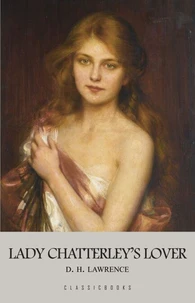
Lady Chatterley's Lover
E-book
0,99 €
0,99 €
Aarons Rod (Unabridged)
Audiobook
5,49 €

5,49 €
Tortoises (Unabridged)
Audiobook
5,49 €
8,02 €
Touch and Go (UNABRIDGED). optional
Audiobook
4,22 €
The Rainbow (UNABRIDGED). optional
Audiobook
4,22 €
The Lost Girl (Unabridged)
Audiobook
4,22 €
England, My England (Unabridged)
Audiobook
4,22 €
The Rainbow (Unabridged)
Audiobook
4,22 €
The Prussian Officer (Unabridged)
Audiobook
4,22 €
The White Peacock (UNABRIDGED)
Audiobook
4,22 €
Sons and Lovers (UNABRIDGED)
Audiobook
4,22 €
Sons and Lovers
E-book
1,99 €