SOLDES
Jusqu'à -70% sur une sélection d'articles*

Nouveauté
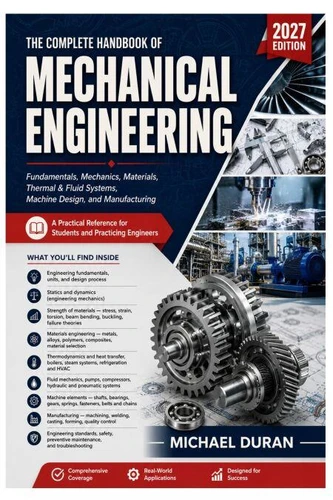
THE COMPLETE HANDBOOK OF MECHANICAL ENGINEERING
Par :Formats :
Disponible dans votre compte client Decitre ou Furet du Nord dès validation de votre commande. Le format ePub est :
- Compatible avec une lecture sur My Vivlio (smartphone, tablette, ordinateur)
- Compatible avec une lecture sur liseuses Vivlio
- Pour les liseuses autres que Vivlio, vous devez utiliser le logiciel Adobe Digital Edition. Non compatible avec la lecture sur les liseuses Kindle, Remarkable et Sony
 , qui est-ce ?
Notre partenaire de plateforme de lecture numérique où vous retrouverez l'ensemble de vos ebooks gratuitement
Pour en savoir plus sur nos ebooks, consultez notre aide en ligne ici
C'est si simple ! Lisez votre ebook avec l'app Vivlio sur votre tablette, mobile ou ordinateur :

- Nombre de pages101
- FormatePub
- ISBN8259607583
- EAN9798259607583
- Date de parution07/07/2026
- Protection num.pas de protection
- Taille819 Ko
- Infos supplémentairesepub
- ÉditeurChiify
Résumé
The Complete Handbook of Mechanical Engineering is a comprehensive, single-volume reference designed to deliver clear, practical coverage of the topics every mechanical engineer, engineering student, and technical professional needs to know. Organized into 9 parts and 41 chapters - plus quick-reference appendices covering essential formulas, unit conversions, material property tables, and a full glossary - this handbook takes you from foundational principles through advanced machine design and manufacturing practice in one logically structured, easy-to-navigate volume.
Each chapter combines clear explanations with worked examples, formula boxes, comparison tables, key takeaways, and review questions, making this both a learning tool for students and a fast, reliable field reference for working engineers.
Coverage includes:
Engineering fundamentals, units, and design process
Statics and dynamics (engineering mechanics)
Strength of materials - stress, strain, torsion, beam bending, buckling, failure theories
Materials engineering - metals, alloys, polymers, composites, material selection
Thermodynamics and heat transfer, boilers, steam systems, refrigeration and HVAC
Fluid mechanics, pumps, compressors, hydraulic and pneumatic systems
Machine elements - shafts, bearings, gears, springs, fasteners, belts and chains
Manufacturing - machining, welding, casting, forming, quality control
Engineering standards, safety, preventive maintenance, and troubleshooting