Nouveauté
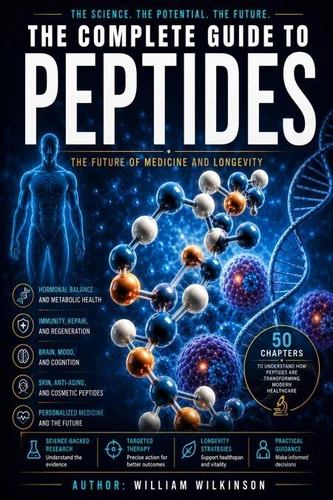
The Complete Guide to Peptides
Par :Formats :
Disponible dans votre compte client Decitre ou Furet du Nord dès validation de votre commande. Le format ePub est :
- Compatible avec une lecture sur My Vivlio (smartphone, tablette, ordinateur)
- Compatible avec une lecture sur liseuses Vivlio
- Pour les liseuses autres que Vivlio, vous devez utiliser le logiciel Adobe Digital Edition. Non compatible avec la lecture sur les liseuses Kindle, Remarkable et Sony
 , qui est-ce ?
Notre partenaire de plateforme de lecture numérique où vous retrouverez l'ensemble de vos ebooks gratuitement
Pour en savoir plus sur nos ebooks, consultez notre aide en ligne ici
C'est si simple ! Lisez votre ebook avec l'app Vivlio sur votre tablette, mobile ou ordinateur :

- FormatePub
- ISBN8235620346
- EAN9798235620346
- Date de parution24/07/2026
- Protection num.pas de protection
- Infos supplémentairesepub
- ÉditeurIoakim Ioakim
Résumé
Welcome to the World of PeptidesImagine, for a moment, that your body is the most sophisticated city ever built. Trillions of cells work around the clock without rest. They build new tissues, repair old ones, defend against invading microbes, store energy, release hormones, and constantly communicate with one another. Every heartbeat, every breath, every thought you have depends on billions of tiny conversations happening inside you every single second.
But how do these cells know what to do?How does a damaged muscle know it's time to heal? How does your brain tell your stomach that you're full? How does your immune system recognize a threat, or your skin begin repairing itself after a cut?The answer often lies in remarkably small molecules carrying remarkably important messages. Those molecules are called peptides. Although you've probably heard the word only recently, peptides have been quietly orchestrating life since the very beginning.
Long before scientists learned how to study them, your body was already relying on them to coordinate countless biological processes with astonishing precision. Today, however, peptides are no longer hidden behind laboratory doors
But how do these cells know what to do?How does a damaged muscle know it's time to heal? How does your brain tell your stomach that you're full? How does your immune system recognize a threat, or your skin begin repairing itself after a cut?The answer often lies in remarkably small molecules carrying remarkably important messages. Those molecules are called peptides. Although you've probably heard the word only recently, peptides have been quietly orchestrating life since the very beginning.
Long before scientists learned how to study them, your body was already relying on them to coordinate countless biological processes with astonishing precision. Today, however, peptides are no longer hidden behind laboratory doors