
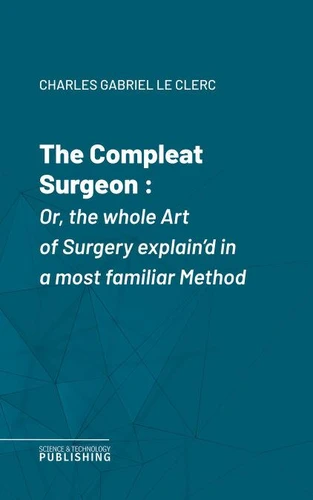
The Compleat Surgeon. Or, the whole Art of Surgery explain'd in a most familiar Method
Par :Formats :
Disponible dans votre compte client Decitre ou Furet du Nord dès validation de votre commande. Le format ePub est :
- Compatible avec une lecture sur My Vivlio (smartphone, tablette, ordinateur)
- Compatible avec une lecture sur liseuses Vivlio
- Pour les liseuses autres que Vivlio, vous devez utiliser le logiciel Adobe Digital Edition. Non compatible avec la lecture sur les liseuses Kindle, Remarkable et Sony
 , qui est-ce ?
Notre partenaire de plateforme de lecture numérique où vous retrouverez l'ensemble de vos ebooks gratuitement
Pour en savoir plus sur nos ebooks, consultez notre aide en ligne ici
C'est si simple ! Lisez votre ebook avec l'app Vivlio sur votre tablette, mobile ou ordinateur :

- FormatePub
- ISBN978-2-5281-0698-3
- EAN9782528106983
- Date de parution01/09/2025
- Protection num.pas de protection
- Infos supplémentairesepub
- ÉditeurScience & Technology Publishing
Résumé
The Compleat Surgeon: Or, the Whole Art of Surgery Explain'd in a Most Familiar Method is a seminal medical manual first published in the early 18th century, attributed to Charles Gabriel Le Clerc and translated into English by Dr. John Smith. This comprehensive guide offers an accessible and systematic overview of surgical knowledge and practice as understood in the early modern period. Written in clear, straightforward language, the book is designed to instruct both aspiring and practicing surgeons, as well as those with a general interest in the healing arts.
The Compleat Surgeon covers a wide array of topics essential to the surgical profession, including the preparation and use of surgical instruments, the management of wounds, fractures, and dislocations, and the treatment of various diseases and conditions requiring surgical intervention. The text delves into the anatomy of the human body, providing practical advice on how to perform common and complex operations, such as amputations, trepanning, and the removal of stones.
It also addresses the care of patients before, during, and after surgery, emphasizing the importance of cleanliness, proper bandaging, and the use of medicinal remedies to promote healing and prevent infection. Throughout the book, the author employs a conversational and didactic tone, breaking down complex procedures into step-by-step instructions that are easy to follow. The Compleat Surgeon also includes numerous case studies and anecdotes drawn from the author's own experience, offering valuable insights into the challenges and triumphs of surgical practice in the pre-modern era.
In addition to its practical content, the book reflects the evolving understanding of medicine and surgery at a time when the profession was beginning to move away from superstition and toward scientific inquiry. Rich in historical detail and practical wisdom, The Compleat Surgeon remains a fascinating window into the world of early surgery, illustrating both the progress and limitations of medical knowledge in the 18th century.
It stands as an important resource for historians of medicine, students of the history of science, and anyone interested in the development of surgical techniques and the lives of those who practiced the healing arts centuries ago.
The Compleat Surgeon covers a wide array of topics essential to the surgical profession, including the preparation and use of surgical instruments, the management of wounds, fractures, and dislocations, and the treatment of various diseases and conditions requiring surgical intervention. The text delves into the anatomy of the human body, providing practical advice on how to perform common and complex operations, such as amputations, trepanning, and the removal of stones.
It also addresses the care of patients before, during, and after surgery, emphasizing the importance of cleanliness, proper bandaging, and the use of medicinal remedies to promote healing and prevent infection. Throughout the book, the author employs a conversational and didactic tone, breaking down complex procedures into step-by-step instructions that are easy to follow. The Compleat Surgeon also includes numerous case studies and anecdotes drawn from the author's own experience, offering valuable insights into the challenges and triumphs of surgical practice in the pre-modern era.
In addition to its practical content, the book reflects the evolving understanding of medicine and surgery at a time when the profession was beginning to move away from superstition and toward scientific inquiry. Rich in historical detail and practical wisdom, The Compleat Surgeon remains a fascinating window into the world of early surgery, illustrating both the progress and limitations of medical knowledge in the 18th century.
It stands as an important resource for historians of medicine, students of the history of science, and anyone interested in the development of surgical techniques and the lives of those who practiced the healing arts centuries ago.