SOLDES
Jusqu'à -70% sur une sélection d'articles*

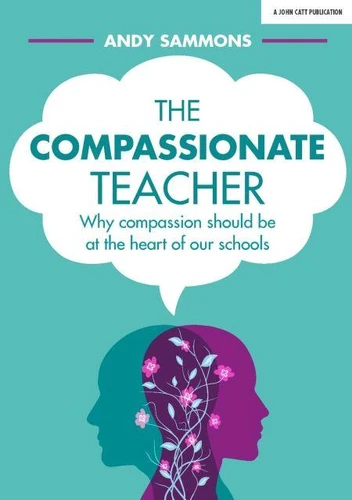
The Compassionate Teacher: Why compassion should be at the heart of our schools
Par :Formats :
Disponible dans votre compte client Decitre ou Furet du Nord dès validation de votre commande. Le format ePub protégé est :
- Compatible avec une lecture sur My Vivlio (smartphone, tablette, ordinateur)
- Compatible avec une lecture sur liseuses Vivlio
- Pour les liseuses autres que Vivlio, vous devez utiliser le logiciel Adobe Digital Edition. Non compatible avec la lecture sur les liseuses Kindle, Remarkable et Sony
- Non compatible avec un achat hors France métropolitaine
 , qui est-ce ?
Notre partenaire de plateforme de lecture numérique où vous retrouverez l'ensemble de vos ebooks gratuitement
Pour en savoir plus sur nos ebooks, consultez notre aide en ligne ici
C'est si simple ! Lisez votre ebook avec l'app Vivlio sur votre tablette, mobile ou ordinateur :

- Nombre de pages200
- FormatePub
- ISBN978-1-3983-8362-3
- EAN9781398383623
- Date de parution10/03/2019
- Protection num.Adobe DRM
- Infos supplémentairesepub
- ÉditeurJohn Catt
Résumé
Ask any teacher why they went into teaching, and they'll invariably refer to students or their subject. Yet, modern educators are faced with a dilemma: the industry judges us primarily on outcomes, offering the justification that grades improve life chances. Grades improve life chances as much as money buys happiness: it's no more than a prop or a poor substitute. Unless the profession starts to get to the heart of its reason for being, we might as well all pack up and go home.
Education has a problem with its `why, ' and unless it starts to encourage and insist its stakeholders start to improve their understanding of why compassion and relationships should be at the heart of everything we do, the same familiar cyclical mistakes will continue to be made, and all of those lovely things that we say we do in modern education such as improving life chances, creating citizens of the future and shaping young minds will be no more than an accidental and indirect by-product of time spent in our educational establishments.
Education has a problem with its `why, ' and unless it starts to encourage and insist its stakeholders start to improve their understanding of why compassion and relationships should be at the heart of everything we do, the same familiar cyclical mistakes will continue to be made, and all of those lovely things that we say we do in modern education such as improving life chances, creating citizens of the future and shaping young minds will be no more than an accidental and indirect by-product of time spent in our educational establishments.