
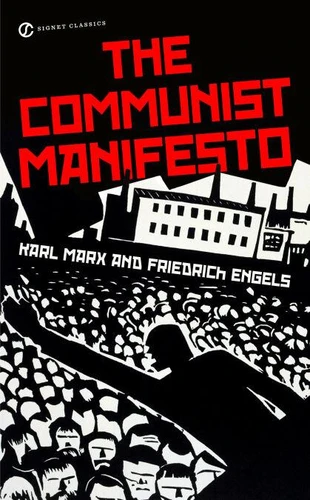
The Communist Manifesto
Par : , , ,Formats :
Disponible dans votre compte client Decitre ou Furet du Nord dès validation de votre commande. Le format ePub protégé est :
- Compatible avec une lecture sur My Vivlio (smartphone, tablette, ordinateur)
- Compatible avec une lecture sur liseuses Vivlio
- Pour les liseuses autres que Vivlio, vous devez utiliser le logiciel Adobe Digital Edition. Non compatible avec la lecture sur les liseuses Kindle, Remarkable et Sony
- Non compatible avec un achat hors France métropolitaine
 , qui est-ce ?
Notre partenaire de plateforme de lecture numérique où vous retrouverez l'ensemble de vos ebooks gratuitement
Pour en savoir plus sur nos ebooks, consultez notre aide en ligne ici
C'est si simple ! Lisez votre ebook avec l'app Vivlio sur votre tablette, mobile ou ordinateur :

- Nombre de pages128
- FormatePub
- ISBN978-1-101-52859-4
- EAN9781101528594
- Date de parution03/05/2011
- Protection num.Adobe DRM
- Taille154 Ko
- Infos supplémentairesepub
- ÉditeurSignet
Résumé
Featuring an extensive, provocative introduction by historian Martin Malia, this authorized English translation of The Communist Manifesto, edited and annotated by Engels, with prefaces to editions published between 1872 and 1888, provides a new opportunity to examine the document that shook the world. In 1848, two young men published what would become one of the defining documents of modern history, The Communist Manifesto.
It rapidly realigned political faultlines all over the world and its aftershock resonates to this day. In the many years since its publication, no other social program has inspired such divisive and violent debate. Ever since the collapse of the Soviet Union, the world's first regime to adopt the Manifesto's tenets, historians have debated its intent and its impact. In the current era of market democracy in Russia and Eastern Europe, nationalism on every continent, and an ever tightening global economy, does the specter of Communism still haunt the world? Were the seeds of Communism's ultimate destruction already planted in 1848? Is there anything to be learned from Marx's envisioned utopia? With an Introduction by Martin Maliaand an Afterword by Stephen Kotkin
It rapidly realigned political faultlines all over the world and its aftershock resonates to this day. In the many years since its publication, no other social program has inspired such divisive and violent debate. Ever since the collapse of the Soviet Union, the world's first regime to adopt the Manifesto's tenets, historians have debated its intent and its impact. In the current era of market democracy in Russia and Eastern Europe, nationalism on every continent, and an ever tightening global economy, does the specter of Communism still haunt the world? Were the seeds of Communism's ultimate destruction already planted in 1848? Is there anything to be learned from Marx's envisioned utopia? With an Introduction by Martin Maliaand an Afterword by Stephen Kotkin
A propos de Karl Marx

Manifeste du parti communiste
Grand Format
9,40 €
3,50 €

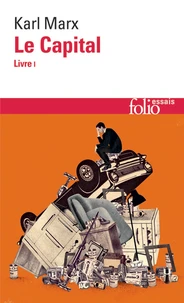
Le capital
Poche
13,99 €
Le Capital
E-book
3,99 €
6,00 €
5/5
7,98 €
1,99 €
2,99 €