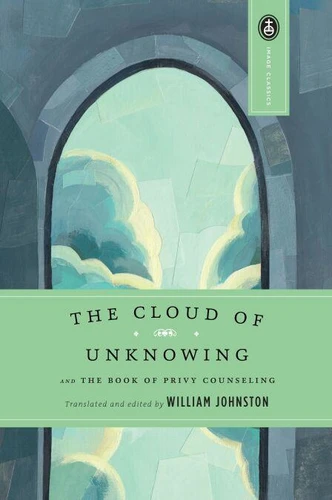
The Cloud of Unknowing. and The Book of Privy Counseling
Par :Formats :
Disponible dans votre compte client Decitre ou Furet du Nord dès validation de votre commande. Le format ePub protégé est :
- Compatible avec une lecture sur My Vivlio (smartphone, tablette, ordinateur)
- Compatible avec une lecture sur liseuses Vivlio
- Pour les liseuses autres que Vivlio, vous devez utiliser le logiciel Adobe Digital Edition. Non compatible avec la lecture sur les liseuses Kindle, Remarkable et Sony
- Non compatible avec un achat hors France métropolitaine
 , qui est-ce ?
Notre partenaire de plateforme de lecture numérique où vous retrouverez l'ensemble de vos ebooks gratuitement
Pour en savoir plus sur nos ebooks, consultez notre aide en ligne ici
C'est si simple ! Lisez votre ebook avec l'app Vivlio sur votre tablette, mobile ou ordinateur :

- Nombre de pages208
- FormatePub
- ISBN978-0-307-80905-6
- EAN9780307809056
- Date de parution11/01/2012
- Protection num.Adobe DRM
- Taille2 Mo
- Infos supplémentairesepub
- ÉditeurImage
Résumé
THE CLOUD OF UNKNOWING and THE BOOK OF PRIVY COUNSELING are the first explorations in the English language of the soul's quest for God. Written in Middle English by an unknown fourteenth-century mystic, THE CLOUD OF UNKNOWING expresses with beauty a message that has inspired such great religious thinkers as St. John of the Cross and Teilhard de Chardin, as well as countless others in search of God.
Offering a practical guide to the life of contemplation, the author explains that ordinary thoughts and earthly concepts must be buried beneath a "cloud of forgetting, " while our love must rise toward a God hidden in the "cloud of unknowing." THE BOOK OF PRIVY COUNSELING, also included in this volume, is a short and moving text on the way to enlightenment through a total loss of self and a consciousness only of the divine.
William Johnston, an authority on fourteenth-century mysticism and spirituality, provides an accessible discussion of the works, detailing what is known about the history of the texts and their author. In a new foreword, Huston Smith draws on his extensive knowledge of the varieties of religious experience to illuminate the relevance of these works for contemporary readers.
Offering a practical guide to the life of contemplation, the author explains that ordinary thoughts and earthly concepts must be buried beneath a "cloud of forgetting, " while our love must rise toward a God hidden in the "cloud of unknowing." THE BOOK OF PRIVY COUNSELING, also included in this volume, is a short and moving text on the way to enlightenment through a total loss of self and a consciousness only of the divine.
William Johnston, an authority on fourteenth-century mysticism and spirituality, provides an accessible discussion of the works, detailing what is known about the history of the texts and their author. In a new foreword, Huston Smith draws on his extensive knowledge of the varieties of religious experience to illuminate the relevance of these works for contemporary readers.