SOLDES
Jusqu'à -70% sur une sélection d'articles*

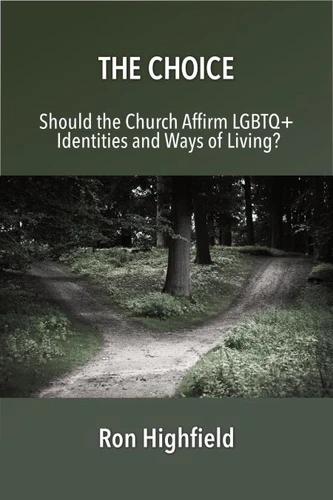
The Choice: Should the Church Affirm LGBTQ+ Identities and Ways of Living?
Par :Formats :
Disponible dans votre compte client Decitre ou Furet du Nord dès validation de votre commande. Le format ePub protégé est :
- Compatible avec une lecture sur My Vivlio (smartphone, tablette, ordinateur)
- Compatible avec une lecture sur liseuses Vivlio
- Pour les liseuses autres que Vivlio, vous devez utiliser le logiciel Adobe Digital Edition. Non compatible avec la lecture sur les liseuses Kindle, Remarkable et Sony
- Non compatible avec un achat hors France métropolitaine
 , qui est-ce ?
Notre partenaire de plateforme de lecture numérique où vous retrouverez l'ensemble de vos ebooks gratuitement
Pour en savoir plus sur nos ebooks, consultez notre aide en ligne ici
C'est si simple ! Lisez votre ebook avec l'app Vivlio sur votre tablette, mobile ou ordinateur :

- FormatePub
- ISBN978-1-958139-44-8
- EAN9781958139448
- Date de parution27/03/2024
- Protection num.Adobe DRM
- Infos supplémentairesepub
- ÉditeurRiversong Books
Résumé
Ron Highfield has made a significant contribution to the present-day discussion of LGBTQ+ claims by a tight focus on the work of Karen Keen. Highfield's The Choice is a careful and erudite analysis of Keen's work that uncovers a species of argument being offered from many quarters. First, he lays bare Keen's postmodern substitution of feeling and rhetoric for Scripture and sound reasoning. "From the postmodern perspective, " he notes, "autobiography is argument." In such a case, Scripture can be displaced by personal desire.
Second, he skillfully explains the implications of such an approach to an orthodox view of the Bible. If only those historic demands of Scripture that pass muster with one's self-defined notions of kindness, justice, love, secular psychology, and minimal human suffering (i.e., inconvenience, restraint of desire) are obligatory to Christians, we are back to the ancient times in Israel when every individual is a law to her/himself.
Contrary to Keen's claim to show how evangelicals can defend an "affirming" case for same-sex marriage, Dr. Highfield demonstrates that her case abandons an orthodox view of God-breathed Scripture in order to read into the Bible what our postmodern culture otherwise could only wish it had said. -Rubel Shelley, MTH, PhD; Teaching Minister, Harpeth Hills Church of Christ, Brentwood, TN; Author of Male & Female God Made Them: A Biblical Review of LGBTQ+ Claims and The Ink is Dry: God's Distinctive Word on Marriage, Family, and Sexual Responsibility Concise, biblical, carefully reasoned - these adjectives characterize Ron Highfield's latest work, The Choice: Should the Church Affirm LGBTQ+ Identities and Ways of Living? Dealing with the key texts related to the LGBTQ+ movement, Highfield gently pushes proponents of a progressive moral agenda to be consistent in their interpretative methods.
When he does so, it becomes clear that their arguments fail. And yet there is no note of triumphalism here. Rather, integrity, logic, grace, and faithfulness to Scripture are the hallmarks of The Choice. I highly recommend this work.-Douglas Jacoby, Professor of Theology, Seminary of the Rockies For more than two millennia, Jews and Christians understood the Bible to teach that sexual relations are properly limited to marriage, an institution ordained of God uniting a man and a woman for lifelong mutual care and the procreation and nurture of offspring.
In recent years, evangelical Christians have been urged to abandon this understanding and recognize intimate relationships between persons of the same sex as enjoying divine blessing. Ron Highfield proposes that rather than acquiescing in the drift of our sexually permissive culture, Christians who seek guidance from the Bible examine carefully the arguments directed against the traditional understanding of sexual morality.
His examination of these arguments merits the attention of every thoughtful reader who regards Scripture as authoritative in matters of faith and morality.- Jeff Peterson, Minister, University Avenue Church of Christ, Austin, Texas
Second, he skillfully explains the implications of such an approach to an orthodox view of the Bible. If only those historic demands of Scripture that pass muster with one's self-defined notions of kindness, justice, love, secular psychology, and minimal human suffering (i.e., inconvenience, restraint of desire) are obligatory to Christians, we are back to the ancient times in Israel when every individual is a law to her/himself.
Contrary to Keen's claim to show how evangelicals can defend an "affirming" case for same-sex marriage, Dr. Highfield demonstrates that her case abandons an orthodox view of God-breathed Scripture in order to read into the Bible what our postmodern culture otherwise could only wish it had said. -Rubel Shelley, MTH, PhD; Teaching Minister, Harpeth Hills Church of Christ, Brentwood, TN; Author of Male & Female God Made Them: A Biblical Review of LGBTQ+ Claims and The Ink is Dry: God's Distinctive Word on Marriage, Family, and Sexual Responsibility Concise, biblical, carefully reasoned - these adjectives characterize Ron Highfield's latest work, The Choice: Should the Church Affirm LGBTQ+ Identities and Ways of Living? Dealing with the key texts related to the LGBTQ+ movement, Highfield gently pushes proponents of a progressive moral agenda to be consistent in their interpretative methods.
When he does so, it becomes clear that their arguments fail. And yet there is no note of triumphalism here. Rather, integrity, logic, grace, and faithfulness to Scripture are the hallmarks of The Choice. I highly recommend this work.-Douglas Jacoby, Professor of Theology, Seminary of the Rockies For more than two millennia, Jews and Christians understood the Bible to teach that sexual relations are properly limited to marriage, an institution ordained of God uniting a man and a woman for lifelong mutual care and the procreation and nurture of offspring.
In recent years, evangelical Christians have been urged to abandon this understanding and recognize intimate relationships between persons of the same sex as enjoying divine blessing. Ron Highfield proposes that rather than acquiescing in the drift of our sexually permissive culture, Christians who seek guidance from the Bible examine carefully the arguments directed against the traditional understanding of sexual morality.
His examination of these arguments merits the attention of every thoughtful reader who regards Scripture as authoritative in matters of faith and morality.- Jeff Peterson, Minister, University Avenue Church of Christ, Austin, Texas