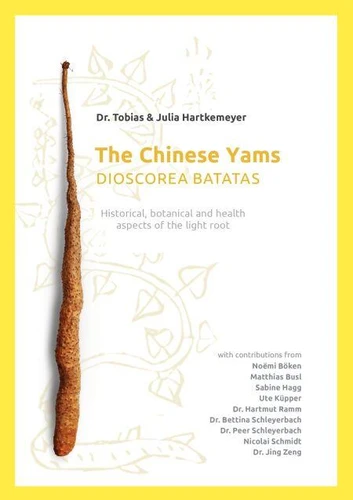
The Chinese Yams (Dioscorea Batata). Historical, botanical and health aspekts of the light root
Par : , , , ,Formats :
Disponible dans votre compte client Decitre ou Furet du Nord dès validation de votre commande. Le format ePub est :
- Compatible avec une lecture sur My Vivlio (smartphone, tablette, ordinateur)
- Compatible avec une lecture sur liseuses Vivlio
- Pour les liseuses autres que Vivlio, vous devez utiliser le logiciel Adobe Digital Edition. Non compatible avec la lecture sur les liseuses Kindle, Remarkable et Sony
 , qui est-ce ?
Notre partenaire de plateforme de lecture numérique où vous retrouverez l'ensemble de vos ebooks gratuitement
Pour en savoir plus sur nos ebooks, consultez notre aide en ligne ici
C'est si simple ! Lisez votre ebook avec l'app Vivlio sur votre tablette, mobile ou ordinateur :

- Nombre de pages188
- FormatePub
- ISBN978-3-6951-7444-7
- EAN9783695174447
- Date de parution20/10/2025
- Protection num.Digital Watermarking
- Taille10 Mo
- Infos supplémentairesepub
- ÉditeurBoD - Books on Demand
Résumé
The Chinese Yams: Dioscorea Batatas (6th revised edition, January 2025) by Dr. Tobias and Julia Hartkemeyer explores the historical, botanical, and health aspects of the Chinese yam, also known as the light root or Lichtyam. This comprehensive work delves into the plant's taxonomy, ethnobotany, cultivation, nutritional properties, and medicinal significance, drawing on contributions from experts in biodynamic farming, Traditional Chinese Medicine (TCM), and anthroposophic principles.
The book traces the yam's ancient origins, its cultivation across Asia, Africa, and the Americas, and its introduction to Europe over 150 years ago. It highlights the plant's cultural and nutritional importance, notably at Andreashof in Ueberlingen, where biodynamic methods enhance its quality. The text covers the yam's morphology, growth cycle, and cultivation practices, emphasizing its adaptability to various climates and soils.
It also discusses its bioactive compounds, such as diosgenin, and their pharmacological benefits, including potential hormonal and anti-inflammatory effects. Innovative quality assessment methods, like biophotonics and eurythmic treatments, underscore the yam's unique "light storage capacity" and vitality, aligning with Rudolf Steiner's anthroposophic insights. The book includes practical applications, such as recipes featuring the light root, and profiles successful cultivation at Andreashof.
Engaging and multidisciplinary, this work invites readers to explore the Chinese yam's rich heritage and potential in modern nutrition and medicine. Read the full book for in-depth insights into this remarkable plant.
The book traces the yam's ancient origins, its cultivation across Asia, Africa, and the Americas, and its introduction to Europe over 150 years ago. It highlights the plant's cultural and nutritional importance, notably at Andreashof in Ueberlingen, where biodynamic methods enhance its quality. The text covers the yam's morphology, growth cycle, and cultivation practices, emphasizing its adaptability to various climates and soils.
It also discusses its bioactive compounds, such as diosgenin, and their pharmacological benefits, including potential hormonal and anti-inflammatory effects. Innovative quality assessment methods, like biophotonics and eurythmic treatments, underscore the yam's unique "light storage capacity" and vitality, aligning with Rudolf Steiner's anthroposophic insights. The book includes practical applications, such as recipes featuring the light root, and profiles successful cultivation at Andreashof.
Engaging and multidisciplinary, this work invites readers to explore the Chinese yam's rich heritage and potential in modern nutrition and medicine. Read the full book for in-depth insights into this remarkable plant.
A propos de Tobias Hartkemeyer

4,49 €