
Nouveauté
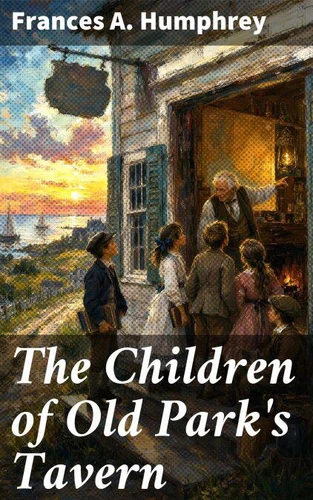
The Children of Old Park's Tavern. A story of the South Shore
Par :Formats :
Disponible dans votre compte client Decitre ou Furet du Nord dès validation de votre commande. Le format ePub est :
- Compatible avec une lecture sur My Vivlio (smartphone, tablette, ordinateur)
- Compatible avec une lecture sur liseuses Vivlio
- Pour les liseuses autres que Vivlio, vous devez utiliser le logiciel Adobe Digital Edition. Non compatible avec la lecture sur les liseuses Kindle, Remarkable et Sony
 , qui est-ce ?
Notre partenaire de plateforme de lecture numérique où vous retrouverez l'ensemble de vos ebooks gratuitement
Pour en savoir plus sur nos ebooks, consultez notre aide en ligne ici
C'est si simple ! Lisez votre ebook avec l'app Vivlio sur votre tablette, mobile ou ordinateur :

- Nombre de pages159
- FormatePub
- ISBN859-65--4790926-2
- EAN8596547909262
- Date de parution29/06/2026
- Protection num.Digital Watermarking
- Taille2 Mo
- Infos supplémentairesepub
- ÉditeurGOOD PRESS
Résumé
Frances A. Humphrey's The Children of Old Park's Tavern appears to belong to the tradition of late nineteenth- and early twentieth-century juvenile historical fiction, where domestic life, moral formation, and local memory are closely intertwined. Centered on the children associated with the titular tavern, the book likely uses an episodic, accessible narrative to animate an older social world for young readers, blending adventure, sentiment, and instruction.
Its style is best understood within a didactic literary culture that treated childhood as a privileged site for teaching civic virtue, family loyalty, and historical imagination. Although Frances A. Humphrey is less widely remembered than some of her contemporaries, her work suggests a writer attuned to the educational and moral aims of children's literature. Authors of this kind often drew upon regional history, inherited anecdotes, and a concern for shaping youthful character through story.
Humphrey's choice of an old tavern as the narrative center hints at an interest in community life and the transmission of values across generations. This book will be especially rewarding for readers interested in forgotten children's classics, women's literary history, and the cultural work of historical fiction for the young. It deserves attention as both a narrative of youthful experience and a document of its literary moment.
Its style is best understood within a didactic literary culture that treated childhood as a privileged site for teaching civic virtue, family loyalty, and historical imagination. Although Frances A. Humphrey is less widely remembered than some of her contemporaries, her work suggests a writer attuned to the educational and moral aims of children's literature. Authors of this kind often drew upon regional history, inherited anecdotes, and a concern for shaping youthful character through story.
Humphrey's choice of an old tavern as the narrative center hints at an interest in community life and the transmission of values across generations. This book will be especially rewarding for readers interested in forgotten children's classics, women's literary history, and the cultural work of historical fiction for the young. It deserves attention as both a narrative of youthful experience and a document of its literary moment.