
Gus Kazim is a spiritual storyteller and researcher dedicated to illuminating the lives of those whose faith shaped history. Rooted in a lifelong journey of seeking, teaching, and healing, Gus weaves narratives that blend historical precision with mystical reflection, inviting readers into deeper understanding and remembrance.
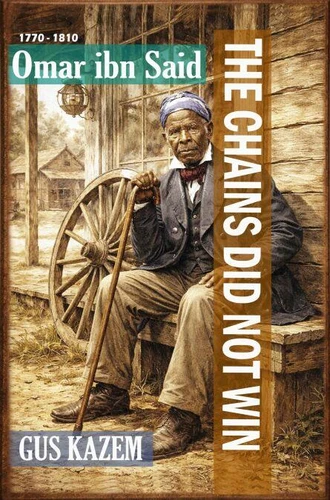
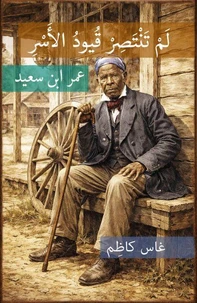
The Chains Did Not Win: Omar ibn Said. Biography
Par :Formats :
Disponible dans votre compte client Decitre ou Furet du Nord dès validation de votre commande. Le format ePub est :
- Compatible avec une lecture sur My Vivlio (smartphone, tablette, ordinateur)
- Compatible avec une lecture sur liseuses Vivlio
- Pour les liseuses autres que Vivlio, vous devez utiliser le logiciel Adobe Digital Edition. Non compatible avec la lecture sur les liseuses Kindle, Remarkable et Sony
 , qui est-ce ?
Notre partenaire de plateforme de lecture numérique où vous retrouverez l'ensemble de vos ebooks gratuitement
Pour en savoir plus sur nos ebooks, consultez notre aide en ligne ici
C'est si simple ! Lisez votre ebook avec l'app Vivlio sur votre tablette, mobile ou ordinateur :

- FormatePub
- ISBN8902800101
- EAN9798902800101
- Date de parution25/12/2025
- Protection num.pas de protection
- Infos supplémentairesepub
- ÉditeurGusgraph Press
Résumé
The Chains Did Not Win: Omar ibn Said recounts the life and legacy of Omar ibn Said, a West African Islamic scholar who was captured and enslaved in the United States during the nineteenth century. Educated in classical Arabic and Islamic sciences before his enslavement, Omar ibn Said left behind one of the most remarkable autobiographical manuscripts written by an enslaved African in North America.
The book traces his journey from scholarship and spiritual formation in Africa to captivity, forced displacement, and life under bondage in the American South. Through historical reconstruction and narrative interpretation, the work examines how faith, literacy, and memory endured despite systematic efforts to erase identity, belief, and culture. Rather than presenting slavery solely through physical suffering, The Chains Did Not Win explores the intellectual and spiritual resistance embodied in Omar ibn Said's writings.
His Arabic texts-often misunderstood or misrepresented in their time-stand as testimony to the persistence of inner freedom amid external captivity. Written for general readers and students of history, the book offers insight into the overlooked presence of African Muslim intellectuals in early America, contributing to broader discussions of slavery, religion, identity, and resilience.
The book traces his journey from scholarship and spiritual formation in Africa to captivity, forced displacement, and life under bondage in the American South. Through historical reconstruction and narrative interpretation, the work examines how faith, literacy, and memory endured despite systematic efforts to erase identity, belief, and culture. Rather than presenting slavery solely through physical suffering, The Chains Did Not Win explores the intellectual and spiritual resistance embodied in Omar ibn Said's writings.
His Arabic texts-often misunderstood or misrepresented in their time-stand as testimony to the persistence of inner freedom amid external captivity. Written for general readers and students of history, the book offers insight into the overlooked presence of African Muslim intellectuals in early America, contributing to broader discussions of slavery, religion, identity, and resilience.
A propos de Gus Kazem
4,49 €

2,99 €
6,99 €