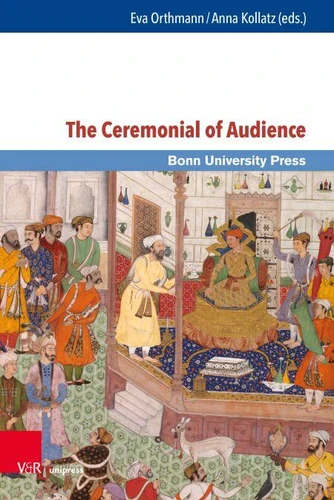
Audiences are among the dominant elements of courtly life and may be referred to as a central aspect of representation of power in many societies. Audiences also served as a stage for negotiation and political decision-making. Beyond that, the ceremonial of audience acted as an integrative factor, strengthening the connections between the ruler and his subjects, the élite and his dynastic background.
It thus reflects the structure, or at least the intended structure of rule, and allows us to get insight into the perception of the ruler in the respective society. This volume offers an approach to forms and structures of audiences in different epochs and regions. Choosing a transcultural and diachronic perspective, it aims at delineating similarities and differences as well as possible lines of development of the ceremonial on a broad basis of case studies.
Audienzen gehören zu den prägenden Bestandteilen höfischen Lebens und können als zentraler Aspekt der Herrschaftsrepräsentation bezeichnet werden.
Sie dienten aber nicht nur der Repräsentation, sondern waren auch Ort von Verhandlung und politischer Entscheidung. Hinzu trat die integrative Funktion der Audienz: Durch den Vollzug des Zeremoniells wurde auch die Verbindung des Herrschers zu seinen Untertanen, Vertrauten und zu seiner Dynastie dargestellt und gefestigt. Das Zeremoniell der Audienz spiegelt somit das (intendierte) Gefüge der Herrschaft, und lässt Rückschlüsse auf das Herrscherbild der jeweiligen Gesellschaft zu.
Der Sammelband behandelt Formen und Strukturen des Audienz-Zeremoniells in transkultureller und diachroner Perspektive, in dem Gemeinsamkeiten und Unterschiede, sowie Entwicklungslinien des Audienz-Zeremoniells auf einer breiten Basis von Fallbeispielen. Dazu versammelt er Beiträge zu unterschiedlichen Teilaspekten des Audienz-Zeremoniells in vormodernen Gesellschaften Europas, Asiens und des nördlichen Afrikas.
Audiences are among the dominant elements of courtly life and may be referred to as a central aspect of representation of power in many societies. Audiences also served as a stage for negotiation and political decision-making. Beyond that, the ceremonial of audience acted as an integrative factor, strengthening the connections between the ruler and his subjects, the élite and his dynastic background.
It thus reflects the structure, or at least the intended structure of rule, and allows us to get insight into the perception of the ruler in the respective society. This volume offers an approach to forms and structures of audiences in different epochs and regions. Choosing a transcultural and diachronic perspective, it aims at delineating similarities and differences as well as possible lines of development of the ceremonial on a broad basis of case studies.
Audienzen gehören zu den prägenden Bestandteilen höfischen Lebens und können als zentraler Aspekt der Herrschaftsrepräsentation bezeichnet werden.
Sie dienten aber nicht nur der Repräsentation, sondern waren auch Ort von Verhandlung und politischer Entscheidung. Hinzu trat die integrative Funktion der Audienz: Durch den Vollzug des Zeremoniells wurde auch die Verbindung des Herrschers zu seinen Untertanen, Vertrauten und zu seiner Dynastie dargestellt und gefestigt. Das Zeremoniell der Audienz spiegelt somit das (intendierte) Gefüge der Herrschaft, und lässt Rückschlüsse auf das Herrscherbild der jeweiligen Gesellschaft zu.
Der Sammelband behandelt Formen und Strukturen des Audienz-Zeremoniells in transkultureller und diachroner Perspektive, in dem Gemeinsamkeiten und Unterschiede, sowie Entwicklungslinien des Audienz-Zeremoniells auf einer breiten Basis von Fallbeispielen. Dazu versammelt er Beiträge zu unterschiedlichen Teilaspekten des Audienz-Zeremoniells in vormodernen Gesellschaften Europas, Asiens und des nördlichen Afrikas.