SOLDES
Jusqu'à -70% sur une sélection d'articles*

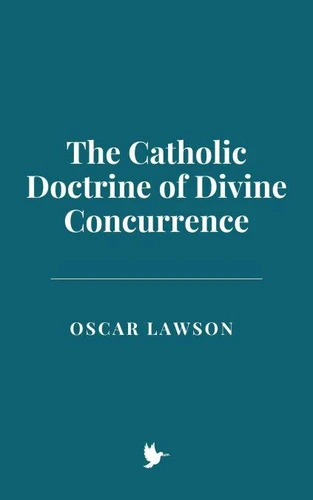
The Catholic Doctrine of Divine Concurrence
Par :Formats :
Disponible dans votre compte client Decitre ou Furet du Nord dès validation de votre commande. Le format ePub est :
- Compatible avec une lecture sur My Vivlio (smartphone, tablette, ordinateur)
- Compatible avec une lecture sur liseuses Vivlio
- Pour les liseuses autres que Vivlio, vous devez utiliser le logiciel Adobe Digital Edition. Non compatible avec la lecture sur les liseuses Kindle, Remarkable et Sony
 , qui est-ce ?
Notre partenaire de plateforme de lecture numérique où vous retrouverez l'ensemble de vos ebooks gratuitement
Pour en savoir plus sur nos ebooks, consultez notre aide en ligne ici
C'est si simple ! Lisez votre ebook avec l'app Vivlio sur votre tablette, mobile ou ordinateur :

- FormatePub
- ISBN8230678786
- EAN9798230678786
- Date de parution01/01/2025
- Protection num.pas de protection
- Infos supplémentairesepub
- ÉditeurIndependently Published
Résumé
This work provides an extensive exploration of the Catholic doctrine of Divine Concurrence, a theological concept that affirms God's active cooperation with all created beings in their actions, balancing divine sovereignty with genuine human freedom. Through twenty chapters, it examines the historical development, scriptural foundations, philosophical underpinnings, and contemporary applications of the doctrine, offering a comprehensive view of its significance within Catholic theology.
The study begins with an analysis of the biblical roots of Divine Concurrence, emphasizing the interplay of divine action and human agency in salvation history. It traces the contributions of Church Fathers such as Augustine and Aquinas, who laid the doctrinal foundations by integrating divine providence and human freedom. Subsequent chapters explore medieval Scholastic debates, particularly those concerning predestination and secondary causality, which refined the theological framework.
Modern challenges, including the problem of evil, scientific advancements, and interfaith dialogue, are addressed in depth, demonstrating the doctrine's adaptability and relevance. Insights from liberation theology, Vatican II, and contemporary theologians like Rahner, von Balthasar, and Polkinghorne reveal how Divine Concurrence informs Catholic responses to social justice, ecological ethics, and the intersection of science and faith.
The work concludes with an eschatological perspective, emphasizing Divine Concurrence's ultimate goal in the fulfillment of God's eternal plan. It highlights how divine grace and human cooperation converge to bring creation to its final unity with God. By integrating historical, philosophical, and practical dimensions, this study not only elucidates the theological intricacies of Divine Concurrence but also underscores its profound implications for daily life, ethical action, and the universal call to holiness.
This comprehensive treatment positions Divine Concurrence as a cornerstone of Catholic thought, bridging divine transcendence and immanence in a world continually shaped by God's providential care.
The study begins with an analysis of the biblical roots of Divine Concurrence, emphasizing the interplay of divine action and human agency in salvation history. It traces the contributions of Church Fathers such as Augustine and Aquinas, who laid the doctrinal foundations by integrating divine providence and human freedom. Subsequent chapters explore medieval Scholastic debates, particularly those concerning predestination and secondary causality, which refined the theological framework.
Modern challenges, including the problem of evil, scientific advancements, and interfaith dialogue, are addressed in depth, demonstrating the doctrine's adaptability and relevance. Insights from liberation theology, Vatican II, and contemporary theologians like Rahner, von Balthasar, and Polkinghorne reveal how Divine Concurrence informs Catholic responses to social justice, ecological ethics, and the intersection of science and faith.
The work concludes with an eschatological perspective, emphasizing Divine Concurrence's ultimate goal in the fulfillment of God's eternal plan. It highlights how divine grace and human cooperation converge to bring creation to its final unity with God. By integrating historical, philosophical, and practical dimensions, this study not only elucidates the theological intricacies of Divine Concurrence but also underscores its profound implications for daily life, ethical action, and the universal call to holiness.
This comprehensive treatment positions Divine Concurrence as a cornerstone of Catholic thought, bridging divine transcendence and immanence in a world continually shaped by God's providential care.
A propos de Oscar Lawson





2,99 €