
Nouveauté
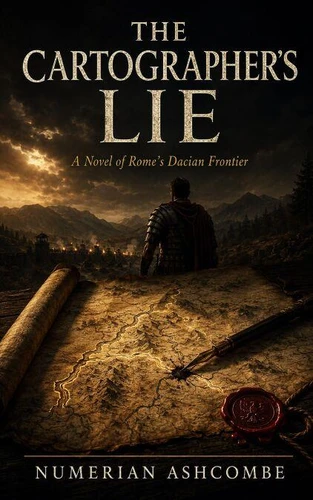
The Cartographer's Lie: A Novel of Rome's Dacian Frontier
Par :Formats :
Disponible dans votre compte client Decitre ou Furet du Nord dès validation de votre commande. Le format ePub est :
- Compatible avec une lecture sur My Vivlio (smartphone, tablette, ordinateur)
- Compatible avec une lecture sur liseuses Vivlio
- Pour les liseuses autres que Vivlio, vous devez utiliser le logiciel Adobe Digital Edition. Non compatible avec la lecture sur les liseuses Kindle, Remarkable et Sony
 , qui est-ce ?
Notre partenaire de plateforme de lecture numérique où vous retrouverez l'ensemble de vos ebooks gratuitement
Pour en savoir plus sur nos ebooks, consultez notre aide en ligne ici
C'est si simple ! Lisez votre ebook avec l'app Vivlio sur votre tablette, mobile ou ordinateur :

- FormatePub
- ISBN8235727915
- EAN9798235727915
- Date de parution22/07/2026
- Protection num.pas de protection
- Infos supplémentairesepub
- ÉditeurIoakim Ioakim
Résumé
A line on a map takes a heartbeat to draw and a lifetime to answer for. Marcus Ravenna was trained by his father to believe that a map is a promise, a small vow that the world looks exactly the way the cartographer says it looks. On the day Rome's frontier machinery asks him to break that promise for the first time, he tells himself it will be the only time. He is wrong. What follows is not a war story told from the shield wall, but something rarer and more unsettling: a war fought entirely in ink, waged by men who never raise a blade, where a single falsified river crossing can drown sixty soldiers who trusted the parchment in their commander's hand more than they trusted their own eyes.
This is the story Rome never told about itself. Behind the legions and the triumphs stood a quieter, more corrosive battlefield, the one where ambitious men in Rome traded soldiers' lives for political advantage, and where the only witness to the trade was a cartographer with a steady hand and a conscience he could no longer afford to listen to. When Marcus discovers that his own charts are being used not to win Rome's wars but to sabotage Rome's own generals, he faces a choice with no clean exit.
Comply, and live with the deaths his hand makes possible. Refuse, and be destroyed by a man who has already shown he can reach further than any soldier's spear. What makes this novel unforgettable is not the scale of its battles, though it carries you through the real and largely forgotten catastrophe at Tapae and the mountain passes of Domitian's Dacian War, but the intimacy of its central question.
How does an honest man survive inside a dishonest system without becoming part of what he despises? Marcus's answer unfolds across two decades, through a friendship with a blunt, loyal centurion who trusts him with his life, a bond with a fiercely intelligent border woman who reads the land better than Rome's entire surveying corps, and a rivalry with a patient, soft spoken enemy who never once raises his voice and never once stops working to destroy him.
Grounded in meticulously researched history, from the real disaster that swallowed a Roman legion at Tapae to the treaty that shamed an emperor to the rise of Trajan and the true Dacian War that followed, this novel moves with the pace and tension of a modern thriller while carrying the weight of genuine history. Every political maneuver, every battlefield, every emperor named in these pages is real.
Only the hand holding the pen is invented, and that hand's choices will keep you reading long after you meant to put the book down. If you have ever wondered what it costs an ordinary, skilled man to stay honest when honesty is dangerous, and what it costs him when he fails, this is the book that will not let you look away. Readers of I, Claudius, The Eagle of the Ninth, and Daughter of the Empire will find here something both familiar and startlingly new: a hero whose battlefield is a drafting table, whose weapon is a stylus, and whose war is fought one carefully placed line at a time.
Some men lie with a sword at another man's throat. Marcus Ravenna learned to lie with nothing more than an honest looking line, and spent the rest of his life trying to earn back the right to draw a true one.
This is the story Rome never told about itself. Behind the legions and the triumphs stood a quieter, more corrosive battlefield, the one where ambitious men in Rome traded soldiers' lives for political advantage, and where the only witness to the trade was a cartographer with a steady hand and a conscience he could no longer afford to listen to. When Marcus discovers that his own charts are being used not to win Rome's wars but to sabotage Rome's own generals, he faces a choice with no clean exit.
Comply, and live with the deaths his hand makes possible. Refuse, and be destroyed by a man who has already shown he can reach further than any soldier's spear. What makes this novel unforgettable is not the scale of its battles, though it carries you through the real and largely forgotten catastrophe at Tapae and the mountain passes of Domitian's Dacian War, but the intimacy of its central question.
How does an honest man survive inside a dishonest system without becoming part of what he despises? Marcus's answer unfolds across two decades, through a friendship with a blunt, loyal centurion who trusts him with his life, a bond with a fiercely intelligent border woman who reads the land better than Rome's entire surveying corps, and a rivalry with a patient, soft spoken enemy who never once raises his voice and never once stops working to destroy him.
Grounded in meticulously researched history, from the real disaster that swallowed a Roman legion at Tapae to the treaty that shamed an emperor to the rise of Trajan and the true Dacian War that followed, this novel moves with the pace and tension of a modern thriller while carrying the weight of genuine history. Every political maneuver, every battlefield, every emperor named in these pages is real.
Only the hand holding the pen is invented, and that hand's choices will keep you reading long after you meant to put the book down. If you have ever wondered what it costs an ordinary, skilled man to stay honest when honesty is dangerous, and what it costs him when he fails, this is the book that will not let you look away. Readers of I, Claudius, The Eagle of the Ninth, and Daughter of the Empire will find here something both familiar and startlingly new: a hero whose battlefield is a drafting table, whose weapon is a stylus, and whose war is fought one carefully placed line at a time.
Some men lie with a sword at another man's throat. Marcus Ravenna learned to lie with nothing more than an honest looking line, and spent the rest of his life trying to earn back the right to draw a true one.