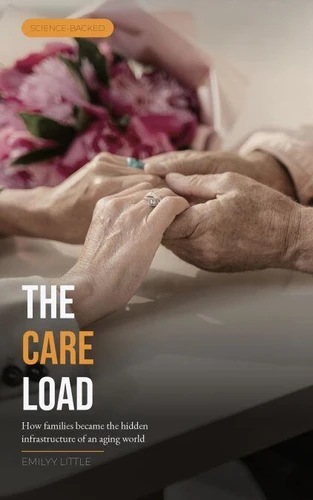
How Families Became the Hidden Infrastructure of an Aging WorldA hospital discharge can quietly create a new job. The patient goes home, and a daughter inherits medications, appointments, transport, monitoring, insurance calls, safety decisions, and the unspoken expectation that someone will make the whole system work. That someone is usually family. The Care Load reveals the hidden operating system underneath modern caregiving.
Drawing on gerontology, health-services research, dementia science, psychology, economics, clinical trials, workplace evidence, and emerging technology research, it shows why caregiving cannot be measured by hours alone. Care comes in seven different loads: task, coordination, vigilance, emotional, physical, decision, and financial. Two families can provide the same number of hours and face radically different strain, because complexity, uncertainty, consequence, recovery, money, skill, health, and backup change what those hours cost.
This book does not treat caregiving as a disease or love as unpaid labor in disguise. Care can be meaningful, intimate, reciprocal, and deeply chosen. The problem begins when formal systems quietly assign more work than a household can safely carry. The solution is not martyrdom. It is making the load visible enough to redesign: matching tasks to capacity, building backup, and using support, technology, workplace flexibility, and public resources to remove real work instead of adding more.
A science-based map of the invisible work families absorb when aging and illness move care home, and a practical framework for redesigning that work before love is forced to substitute for an entire care system.
How Families Became the Hidden Infrastructure of an Aging WorldA hospital discharge can quietly create a new job. The patient goes home, and a daughter inherits medications, appointments, transport, monitoring, insurance calls, safety decisions, and the unspoken expectation that someone will make the whole system work. That someone is usually family. The Care Load reveals the hidden operating system underneath modern caregiving.
Drawing on gerontology, health-services research, dementia science, psychology, economics, clinical trials, workplace evidence, and emerging technology research, it shows why caregiving cannot be measured by hours alone. Care comes in seven different loads: task, coordination, vigilance, emotional, physical, decision, and financial. Two families can provide the same number of hours and face radically different strain, because complexity, uncertainty, consequence, recovery, money, skill, health, and backup change what those hours cost.
This book does not treat caregiving as a disease or love as unpaid labor in disguise. Care can be meaningful, intimate, reciprocal, and deeply chosen. The problem begins when formal systems quietly assign more work than a household can safely carry. The solution is not martyrdom. It is making the load visible enough to redesign: matching tasks to capacity, building backup, and using support, technology, workplace flexibility, and public resources to remove real work instead of adding more.
A science-based map of the invisible work families absorb when aging and illness move care home, and a practical framework for redesigning that work before love is forced to substitute for an entire care system.


 , qui est-ce ?