Author of English-language books covering self-development, leadership in business, and key historical turning points. Noah reveals patterns from the past that drive success today, inspiring lasting change.
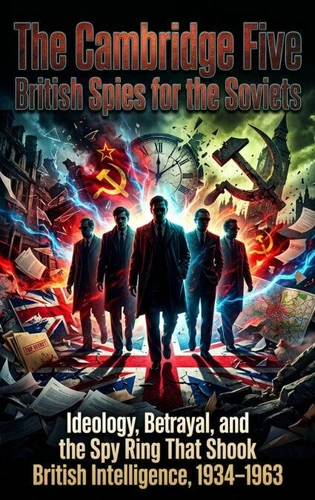
The Cambridge Five: British Spies for the Soviets. Ideology, Betrayal, and the Spy Ring That Shook British Intelligence, 1934–1963
Par :Formats :
Disponible dans votre compte client Decitre ou Furet du Nord dès validation de votre commande. Le format ePub est :
- Compatible avec une lecture sur My Vivlio (smartphone, tablette, ordinateur)
- Compatible avec une lecture sur liseuses Vivlio
- Pour les liseuses autres que Vivlio, vous devez utiliser le logiciel Adobe Digital Edition. Non compatible avec la lecture sur les liseuses Kindle, Remarkable et Sony
 , qui est-ce ?
Notre partenaire de plateforme de lecture numérique où vous retrouverez l'ensemble de vos ebooks gratuitement
Pour en savoir plus sur nos ebooks, consultez notre aide en ligne ici
C'est si simple ! Lisez votre ebook avec l'app Vivlio sur votre tablette, mobile ou ordinateur :

- Nombre de pages168
- FormatePub
- ISBN978-3-565-32668-6
- EAN9783565326686
- Date de parution15/03/2026
- Protection num.pas de protection
- Taille2 Mo
- Infos supplémentairesepub
- ÉditeurEmphaloz Publishing House
Résumé
They were recruited not by coercion or money, but by conviction. Kim Philby, Guy Burgess, Donald Maclean, Anthony Blunt, and John Cairncross were among Britain's most privileged young men-educated at Cambridge, destined for the establishment-who chose, in the shadow of rising fascism, to spy for the Soviet Union. For nearly three decades, they passed some of the most sensitive intelligence in Western history to Moscow, compromising Allied operations, exposing agents, and shaping Cold War strategy from inside the institutions sworn to defend against it.
This book reconstructs the Cambridge Five from recruitment through exposure, drawing on declassified MI5 files, KGB archives, and first-hand accounts.
It examines the ideological world of 1930s Cambridge that made Soviet recruitment possible-the disillusionment with British imperialism, the appeal of communist internationalism, the class contempt that blinded the establishment to threats within its own ranks. It traces each man's career: the operations compromised, the colleagues betrayed, the cover stories that held for years longer than they should have. This is not a story about exceptional villains.
It is a study in how institutions fail when they trust pedigree over scrutiny-and how ideology, once embedded in the right corridors, can hollow an intelligence service from within.
It examines the ideological world of 1930s Cambridge that made Soviet recruitment possible-the disillusionment with British imperialism, the appeal of communist internationalism, the class contempt that blinded the establishment to threats within its own ranks. It traces each man's career: the operations compromised, the colleagues betrayed, the cover stories that held for years longer than they should have. This is not a story about exceptional villains.
It is a study in how institutions fail when they trust pedigree over scrutiny-and how ideology, once embedded in the right corridors, can hollow an intelligence service from within.