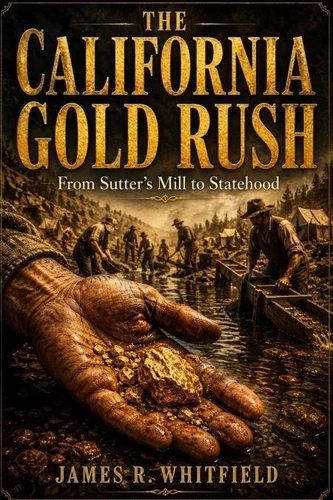
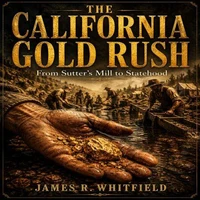
THE CALIFORNIA GOLD RUSH. From Sutter's Mill to Statehood
Par :Formats :
Disponible dans votre compte client Decitre ou Furet du Nord dès validation de votre commande. Le format ePub est :
- Compatible avec une lecture sur My Vivlio (smartphone, tablette, ordinateur)
- Compatible avec une lecture sur liseuses Vivlio
- Pour les liseuses autres que Vivlio, vous devez utiliser le logiciel Adobe Digital Edition. Non compatible avec la lecture sur les liseuses Kindle, Remarkable et Sony
 , qui est-ce ?
Notre partenaire de plateforme de lecture numérique où vous retrouverez l'ensemble de vos ebooks gratuitement
Pour en savoir plus sur nos ebooks, consultez notre aide en ligne ici
C'est si simple ! Lisez votre ebook avec l'app Vivlio sur votre tablette, mobile ou ordinateur :

- FormatePub
- ISBN8905168444
- EAN9798905168444
- Date de parution02/06/2026
- Protection num.pas de protection
- Taille1 Mo
- Infos supplémentairesepub
- ÉditeurChiify
Résumé
California Gold Rush history - from Sutter's Mill to statehood, the forty-niners, and the American West transformation of 1848-1860. How gold discovery triggered the largest voluntary migration in human history and destroyed a civilization.
On January 24, 1848, carpenter James Marshall picked a half-pea-sized piece of metal from the tailrace of John Sutter's sawmill on the American River. Mormon diarist Henry Bigler recorded it that night: "this day some kind of mettle was found in the tail race that looks like goald." Sutter tested the flake with nitric acid and apothecary scales - twenty-three carats fine - and wrote in his diary: "What a great misfortune was this sudden discovery for me!" He was right.
Within a year his workers had left for the diggings, his wheat rotted unharvested, and his land titles were in litigation. He died in Washington in 1880, broke, still petitioning Congress for restitution. James R. Whitfield's California Gold Rush narrative covers twenty-six chapters - from Mexican California's 150, 000 Indigenous people through Polk's 1848 Congressional message that sent 90, 000 forty-niners west, the $81 million peak production of 1852, and the 1.5 billion cubic yards of debris that choked the Sacramento River and produced America's first major environmental court case in 1884.
California's non-Native population grew from 14, 000 to 380, 000 in twelve years. Its Indigenous population fell from 150, 000 to under 30, 000. Inside this American West history: The discovery and the news going out - Brannan's quinine bottle, Polk's message, and migration from Hunan to Cornwall to New South Wales (Chapters 4-6) The boomtowns - Coloma, Hangtown, Mokelumne Hill's French and German newspapers, and 200 named camps whose canvas traces are nearly invisible today (Chapter 11) Chinese miners and the Foreign Miners' Tax - called to the "Gold Mountain, " taxed and expelled, written out of the official story (Chapter 13) California Indians and genocide - state-legislature-approved killing-campaign budgets, population collapse from 150, 000 to under 30, 000 (Chapter 17) Hydraulic mining and environmental catastrophe - Matteson's 1853 invention, the North Bloomfield monitors dismantling entire hillsides, and the 1884 Woodruff v.
North Bloomfield decision (Chapter 23) What the rush built - San Francisco's rise, the Transcontinental Railroad's financing, and $2 billion in nineteenth-century gold (Chapters 22, 25) The flake Marshall found is in the Smithsonian today. The Gold Rush it started built an economy and destroyed a civilization. Whitfield's narrative holds both without looking away. For readers of H. W. Brands's THE AGE OF GOLD and J.
S. Holliday's THE WORLD RUSHED IN.
Within a year his workers had left for the diggings, his wheat rotted unharvested, and his land titles were in litigation. He died in Washington in 1880, broke, still petitioning Congress for restitution. James R. Whitfield's California Gold Rush narrative covers twenty-six chapters - from Mexican California's 150, 000 Indigenous people through Polk's 1848 Congressional message that sent 90, 000 forty-niners west, the $81 million peak production of 1852, and the 1.5 billion cubic yards of debris that choked the Sacramento River and produced America's first major environmental court case in 1884.
California's non-Native population grew from 14, 000 to 380, 000 in twelve years. Its Indigenous population fell from 150, 000 to under 30, 000. Inside this American West history: The discovery and the news going out - Brannan's quinine bottle, Polk's message, and migration from Hunan to Cornwall to New South Wales (Chapters 4-6) The boomtowns - Coloma, Hangtown, Mokelumne Hill's French and German newspapers, and 200 named camps whose canvas traces are nearly invisible today (Chapter 11) Chinese miners and the Foreign Miners' Tax - called to the "Gold Mountain, " taxed and expelled, written out of the official story (Chapter 13) California Indians and genocide - state-legislature-approved killing-campaign budgets, population collapse from 150, 000 to under 30, 000 (Chapter 17) Hydraulic mining and environmental catastrophe - Matteson's 1853 invention, the North Bloomfield monitors dismantling entire hillsides, and the 1884 Woodruff v.
North Bloomfield decision (Chapter 23) What the rush built - San Francisco's rise, the Transcontinental Railroad's financing, and $2 billion in nineteenth-century gold (Chapters 22, 25) The flake Marshall found is in the Smithsonian today. The Gold Rush it started built an economy and destroyed a civilization. Whitfield's narrative holds both without looking away. For readers of H. W. Brands's THE AGE OF GOLD and J.
S. Holliday's THE WORLD RUSHED IN.
A propos de James R. Whitfield


9,49 €


9,49 €