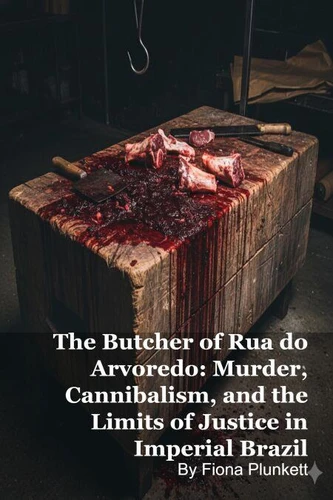
The Butcher of Rua do Arvoredo: Murder, Cannibalism, and the Limits of Justice in Imperial BrazilSummaryIn 1864 Porto Alegre, a confession shattered the city's sense of safety. Catarina Palse revealed that she and José Ramos had systematically murdered immigrants at their butcher shop on Rua do Arvoredo-luring victims, stealing their property, and allegedly processing their bodies into sausages sold to unsuspecting customers.
Investigation uncovered three dismembered bodies: Carlos Claussner buried in the basement, Januário and José Ignacio dumped in the well. But the case's horror was matched by its corruption. Judge Dario Rafael Callado, serving as both Chief of Police and judicial officer, had employed Ramos as an informant, creating conflicts that compromised the investigation. The trial focused narrowly on provable robbery-murders, avoiding the unprovable cannibalism allegations that would fuel legend for generations.
Ramos received life imprisonment, maintaining his denial until dying blind and alone in 1893. Palse, judged less culpable, served thirteen years before vanishing into obscurity. Their crimes exposed how systematic evil could flourish under institutional protection, how justice could be both served and subverted, and how gaps between proven facts and persistent rumors create enduring legends that outlive all witnesses to truth.
The Butcher of Rua do Arvoredo: Murder, Cannibalism, and the Limits of Justice in Imperial BrazilSummaryIn 1864 Porto Alegre, a confession shattered the city's sense of safety. Catarina Palse revealed that she and José Ramos had systematically murdered immigrants at their butcher shop on Rua do Arvoredo-luring victims, stealing their property, and allegedly processing their bodies into sausages sold to unsuspecting customers.
Investigation uncovered three dismembered bodies: Carlos Claussner buried in the basement, Januário and José Ignacio dumped in the well. But the case's horror was matched by its corruption. Judge Dario Rafael Callado, serving as both Chief of Police and judicial officer, had employed Ramos as an informant, creating conflicts that compromised the investigation. The trial focused narrowly on provable robbery-murders, avoiding the unprovable cannibalism allegations that would fuel legend for generations.
Ramos received life imprisonment, maintaining his denial until dying blind and alone in 1893. Palse, judged less culpable, served thirteen years before vanishing into obscurity. Their crimes exposed how systematic evil could flourish under institutional protection, how justice could be both served and subverted, and how gaps between proven facts and persistent rumors create enduring legends that outlive all witnesses to truth.


 , qui est-ce ?
