SOLDES
Jusqu'à -70% sur une sélection d'articles*

Nouveauté
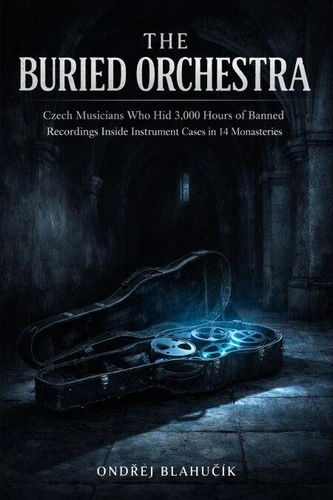
The Buried Orchestra: Czech Musicians Who Hid 3,000 Hours of Banned Recordings Inside Instrument Cases in 14 Monasteries
Par :Formats :
Disponible dans votre compte client Decitre ou Furet du Nord dès validation de votre commande. Le format ePub est :
- Compatible avec une lecture sur My Vivlio (smartphone, tablette, ordinateur)
- Compatible avec une lecture sur liseuses Vivlio
- Pour les liseuses autres que Vivlio, vous devez utiliser le logiciel Adobe Digital Edition. Non compatible avec la lecture sur les liseuses Kindle, Remarkable et Sony
 , qui est-ce ?
Notre partenaire de plateforme de lecture numérique où vous retrouverez l'ensemble de vos ebooks gratuitement
Pour en savoir plus sur nos ebooks, consultez notre aide en ligne ici
C'est si simple ! Lisez votre ebook avec l'app Vivlio sur votre tablette, mobile ou ordinateur :

- FormatePub
- ISBN8235903500
- EAN9798235903500
- Date de parution03/06/2026
- Protection num.pas de protection
- Infos supplémentairesepub
- ÉditeurIoakim Ioakim
Résumé
THE BURIED ORCHESTRA Czech Musicians Who Hid 3, 000 Hours of Banned Recordings Inside Instrument Cases in 14 Monasteries by Ondrej BlahucíkIn October 2019, a researcher sat down on a cold stone floor in a Benedictine monastery in northeastern Bohemia and counted forty-seven reels of Soviet magnetic recording tape stored inside a wooden trunk. The labels were handwritten in at least two different hands.
One said only: LISTEN. He had found the buried orchestra. After the Warsaw Pact invasion of Czechoslovakia in August 1968 crushed the Prague Spring and installed the normalization regime of Gustáv Husák, the communist government built something more corrosive than outright terror. It built a machine for the slow erasure of authentic life. Musicians had their performance licenses revoked. Composers who had spent careers building reputations became warehouse workers overnight.
Recordings were quietly pulled from broadcast archives as if the artists had never existed. The official culture was made smooth, compliant, and politically harmless. Everything that actually mattered was forced underground. What the regime failed to anticipate was the instrument cases. And the monks. For nearly two decades, an underground network ran one of the most disciplined covert archiving operations in European history.
Recordings were made in apartments, farmhouses, and village halls across Bohemia and Moravia. Archival copies were wrapped in cloth, tucked beneath violin necks, concealed inside guitar case false-bottoms, and carried by ordinary people on ordinary trains through a country where the Czechoslovak secret police, the StB, maintained 40, 000 registered civilian informants and monitored mail, telephone lines, and social gatherings as a matter of routine.
The carriers learned to carry things as though they were carrying nothing. The fear was constant. So was the discipline. At the end of each run, the cases were opened in monastery storerooms. Benedictine, Cistercian, and Franciscan communities, themselves living under state suppression since 1950, accepted what was handed to them and asked few questions. They had been keeping dangerous things safe through hostile regimes for centuries.
They understood what was being asked. Three thousand hours of recorded music. Fourteen monasteries. Twenty years of operations that the StB, for all its reach, never uncovered. What Ondrej Blahucík found across those fourteen locations and three years of research was not just an archive. It was the complete musical testament of a generation of Czech and Slovak artists who refused to stop making work that was honest, who accepted poverty and surveillance and professional annihilation rather than accept the silence the state required of them.
Composers whose song cycles deserved concert halls spent eighteen years in warehouses. Jazz musicians of international caliber played in rooms that held forty people. Folk singers carried forward a tradition the official culture had hollowed out and replaced with an approved replica. All of it is on the tapes. The Buried Orchestra is the account of how those tapes were made, how they were hidden, how they survived, and what they contain.
It is a book about music as an act of defiance so quiet and so sustained that it outlasted the government that made it necessary. It is a book about what monasteries are actually for. It is a book about the specific human courage required to carry something precious in a case on a train and open that case when a police officer asks you to, and show him the violin, and hold your breathing steady. And it is, finally, a book about what fifty years of silence sounds like when it ends.
One said only: LISTEN. He had found the buried orchestra. After the Warsaw Pact invasion of Czechoslovakia in August 1968 crushed the Prague Spring and installed the normalization regime of Gustáv Husák, the communist government built something more corrosive than outright terror. It built a machine for the slow erasure of authentic life. Musicians had their performance licenses revoked. Composers who had spent careers building reputations became warehouse workers overnight.
Recordings were quietly pulled from broadcast archives as if the artists had never existed. The official culture was made smooth, compliant, and politically harmless. Everything that actually mattered was forced underground. What the regime failed to anticipate was the instrument cases. And the monks. For nearly two decades, an underground network ran one of the most disciplined covert archiving operations in European history.
Recordings were made in apartments, farmhouses, and village halls across Bohemia and Moravia. Archival copies were wrapped in cloth, tucked beneath violin necks, concealed inside guitar case false-bottoms, and carried by ordinary people on ordinary trains through a country where the Czechoslovak secret police, the StB, maintained 40, 000 registered civilian informants and monitored mail, telephone lines, and social gatherings as a matter of routine.
The carriers learned to carry things as though they were carrying nothing. The fear was constant. So was the discipline. At the end of each run, the cases were opened in monastery storerooms. Benedictine, Cistercian, and Franciscan communities, themselves living under state suppression since 1950, accepted what was handed to them and asked few questions. They had been keeping dangerous things safe through hostile regimes for centuries.
They understood what was being asked. Three thousand hours of recorded music. Fourteen monasteries. Twenty years of operations that the StB, for all its reach, never uncovered. What Ondrej Blahucík found across those fourteen locations and three years of research was not just an archive. It was the complete musical testament of a generation of Czech and Slovak artists who refused to stop making work that was honest, who accepted poverty and surveillance and professional annihilation rather than accept the silence the state required of them.
Composers whose song cycles deserved concert halls spent eighteen years in warehouses. Jazz musicians of international caliber played in rooms that held forty people. Folk singers carried forward a tradition the official culture had hollowed out and replaced with an approved replica. All of it is on the tapes. The Buried Orchestra is the account of how those tapes were made, how they were hidden, how they survived, and what they contain.
It is a book about music as an act of defiance so quiet and so sustained that it outlasted the government that made it necessary. It is a book about what monasteries are actually for. It is a book about the specific human courage required to carry something precious in a case on a train and open that case when a police officer asks you to, and show him the violin, and hold your breathing steady. And it is, finally, a book about what fifty years of silence sounds like when it ends.