SOLDES
Jusqu'à -70% sur une sélection d'articles*

Nouveauté
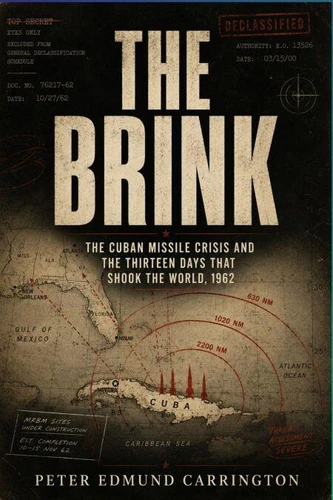
THE BRINK. The Cuban Missile Crisis and the Thirteen Days That Shook the World, 1962
Par :Formats :
Disponible dans votre compte client Decitre ou Furet du Nord dès validation de votre commande. Le format ePub est :
- Compatible avec une lecture sur My Vivlio (smartphone, tablette, ordinateur)
- Compatible avec une lecture sur liseuses Vivlio
- Pour les liseuses autres que Vivlio, vous devez utiliser le logiciel Adobe Digital Edition. Non compatible avec la lecture sur les liseuses Kindle, Remarkable et Sony
 , qui est-ce ?
Notre partenaire de plateforme de lecture numérique où vous retrouverez l'ensemble de vos ebooks gratuitement
Pour en savoir plus sur nos ebooks, consultez notre aide en ligne ici
C'est si simple ! Lisez votre ebook avec l'app Vivlio sur votre tablette, mobile ou ordinateur :

- FormatePub
- ISBN8905168451
- EAN9798905168451
- Date de parution02/06/2026
- Protection num.pas de protection
- Taille1 Mo
- Infos supplémentairesepub
- ÉditeurChiify
Résumé
Cuban Missile Crisis history - Kennedy, Khrushchev, and the thirteen days in October 1962 that brought the world to the brink of nuclear war. The complete narrative of ExComm, Black Saturday, and the secret deal that ended the standoff.
On the morning of October 14, 1962, U-2 pilot Major Richard Heyser flew a long arc over western Cuba. The photographs he brought back - processed overnight and examined at the National Photographic Interpretation Center - showed the early stages of Soviet medium-range ballistic missile sites, weapons capable of reaching Washington and New York in minutes.
McGeorge Bundy waited until morning to wake the president. What followed were thirteen days that brought the United States and the Soviet Union closer to thermonuclear war than the world has come before or since. Peter Edmund Carrington's Cuban Missile Crisis narrative traces the full arc across twenty-four chapters, from Castro's revolution, the Bay of Pigs disaster, and Khrushchev's missile gamble through ExComm's secret deliberations, the naval quarantine, and the pivotal decisions of Black Saturday - October 27, 1962, when a U-2 was shot down over Cuba, a Soviet submarine was forced to surface with a nuclear torpedo aboard, and Kennedy told his brother he estimated the odds of nuclear war at one in three.
The book names every key figure: Kennedy and Khrushchev, Robert Kennedy and Ambassador Dobrynin, Dean Rusk and Robert McNamara, and the local Soviet officers whose unauthorized decisions nearly ended civilization. Inside this Cold War history: Khrushchev's gamble - why the Soviet premier decided to place missiles in Cuba: the Berlin problem, the Jupiter missiles in Turkey, and the lesson he drew from Kennedy's Bay of Pigs failure (Chapters 3-4) ExComm's secret debate - the six options considered (airstrike, invasion, blockade, diplomacy), the arguments for each, and how Kennedy chose the quarantine as the middle path (Chapters 5-7) The two Khrushchev letters - the first letter's emotional plea about the "knot" of war neither man could untie, the second's Turkish missile demand, and the "Trollope ploy" that allowed Kennedy to answer only the favorable one (Chapter 11) Black Saturday - Major Rudolf Anderson's U-2 shot down over Cuba, a second U-2 straying into Soviet airspace, submarine B-59 forced to surface with its nuclear torpedo, and Kennedy's refusal to order retaliation (Chapter 12) The secret deal - Robert Kennedy's private message to Dobrynin: the Jupiter missiles in Turkey would be removed within four to five months, on condition the agreement could never be publicly acknowledged (Chapter 13) The Hot Line and the Partial Test Ban Treaty - how the thirteen days directly produced the first arms control measures of the nuclear age (Chapters 21-22) Kennedy estimated even odds of nuclear war on the evening of October 27.
His refusal to retaliate for Anderson's shoot-down - against unanimous Joint Chiefs pressure - was the decision that kept the diplomatic track open. Carrington's Cuban Missile Crisis history shows exactly how close the rational pursuit of national interest came to irrational catastrophe, and what it took to pull back. For readers of Martin Walker's THE COLD WAR and Michael Dobbs's ONE MINUTE TO MIDNIGHT.
McGeorge Bundy waited until morning to wake the president. What followed were thirteen days that brought the United States and the Soviet Union closer to thermonuclear war than the world has come before or since. Peter Edmund Carrington's Cuban Missile Crisis narrative traces the full arc across twenty-four chapters, from Castro's revolution, the Bay of Pigs disaster, and Khrushchev's missile gamble through ExComm's secret deliberations, the naval quarantine, and the pivotal decisions of Black Saturday - October 27, 1962, when a U-2 was shot down over Cuba, a Soviet submarine was forced to surface with a nuclear torpedo aboard, and Kennedy told his brother he estimated the odds of nuclear war at one in three.
The book names every key figure: Kennedy and Khrushchev, Robert Kennedy and Ambassador Dobrynin, Dean Rusk and Robert McNamara, and the local Soviet officers whose unauthorized decisions nearly ended civilization. Inside this Cold War history: Khrushchev's gamble - why the Soviet premier decided to place missiles in Cuba: the Berlin problem, the Jupiter missiles in Turkey, and the lesson he drew from Kennedy's Bay of Pigs failure (Chapters 3-4) ExComm's secret debate - the six options considered (airstrike, invasion, blockade, diplomacy), the arguments for each, and how Kennedy chose the quarantine as the middle path (Chapters 5-7) The two Khrushchev letters - the first letter's emotional plea about the "knot" of war neither man could untie, the second's Turkish missile demand, and the "Trollope ploy" that allowed Kennedy to answer only the favorable one (Chapter 11) Black Saturday - Major Rudolf Anderson's U-2 shot down over Cuba, a second U-2 straying into Soviet airspace, submarine B-59 forced to surface with its nuclear torpedo, and Kennedy's refusal to order retaliation (Chapter 12) The secret deal - Robert Kennedy's private message to Dobrynin: the Jupiter missiles in Turkey would be removed within four to five months, on condition the agreement could never be publicly acknowledged (Chapter 13) The Hot Line and the Partial Test Ban Treaty - how the thirteen days directly produced the first arms control measures of the nuclear age (Chapters 21-22) Kennedy estimated even odds of nuclear war on the evening of October 27.
His refusal to retaliate for Anderson's shoot-down - against unanimous Joint Chiefs pressure - was the decision that kept the diplomatic track open. Carrington's Cuban Missile Crisis history shows exactly how close the rational pursuit of national interest came to irrational catastrophe, and what it took to pull back. For readers of Martin Walker's THE COLD WAR and Michael Dobbs's ONE MINUTE TO MIDNIGHT.