
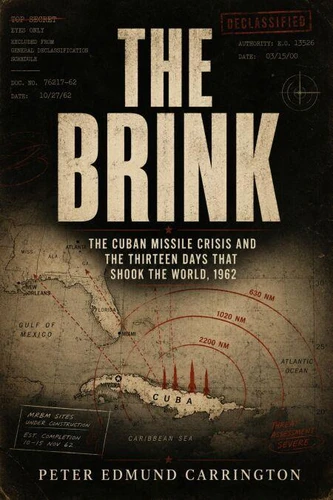
THE BRINK. The Cuban Missile Crisis and the Thirteen Days That Shook the World, 1962
Par :Formats :
Disponible dans votre compte client Decitre ou Furet du Nord dès validation de votre commande. Le format ePub est :
- Compatible avec une lecture sur My Vivlio (smartphone, tablette, ordinateur)
- Compatible avec une lecture sur liseuses Vivlio
- Pour les liseuses autres que Vivlio, vous devez utiliser le logiciel Adobe Digital Edition. Non compatible avec la lecture sur les liseuses Kindle, Remarkable et Sony
 , qui est-ce ?
Notre partenaire de plateforme de lecture numérique où vous retrouverez l'ensemble de vos ebooks gratuitement
Pour en savoir plus sur nos ebooks, consultez notre aide en ligne ici
C'est si simple ! Lisez votre ebook avec l'app Vivlio sur votre tablette, mobile ou ordinateur :

- FormatePub
- ISBN8905160264
- EAN9798905160264
- Date de parution29/05/2026
- Protection num.Digital Watermarking
- Taille143 Ko
- Infos supplémentairesepub
- ÉditeurChiify
Résumé
In October 1962, a U-2 spy plane photographed Soviet missile sites in Cuba, triggering the most dangerous thirteen days of the Cold War. Historian Peter Edmund Carrington traces the crisis through the key figures - Kennedy, Khrushchev, Robert Kennedy, McNamara, Castro, and the ExComm advisers - revealing the decisions, miscalculations, and near-disasters that brought the world to the edge of nuclear war.
Kennedy rejected his generals' calls for an airstrike, opting instead for a naval blockade.
Behind the scenes, secret backchannels between Robert Kennedy and Soviet ambassador Dobrynin quietly negotiated a way out - the removal of U. S. Jupiter missiles from Turkey in exchange for the Soviets withdrawing from Cuba. On Black Saturday, October 27, a U-2 was shot down over Cuba and another strayed into Soviet airspace, pushing tensions to breaking point. Beneath the Atlantic, a Soviet submarine commander nearly launched a nuclear torpedo before being talked down by a single officer, Vasili Arkhipov - a man whose name never made the headlines but whose judgment may have saved the world. Carrington argues the crisis ended not through strategy alone, but through leadership, luck, and the quiet courage of individuals acting under extreme pressure.
The aftermath brought the Moscow-Washington Hot Line and the Partial Test Ban Treaty - and left an enduring question for the nuclear age: can leaders always step back from the brink?
Behind the scenes, secret backchannels between Robert Kennedy and Soviet ambassador Dobrynin quietly negotiated a way out - the removal of U. S. Jupiter missiles from Turkey in exchange for the Soviets withdrawing from Cuba. On Black Saturday, October 27, a U-2 was shot down over Cuba and another strayed into Soviet airspace, pushing tensions to breaking point. Beneath the Atlantic, a Soviet submarine commander nearly launched a nuclear torpedo before being talked down by a single officer, Vasili Arkhipov - a man whose name never made the headlines but whose judgment may have saved the world. Carrington argues the crisis ended not through strategy alone, but through leadership, luck, and the quiet courage of individuals acting under extreme pressure.
The aftermath brought the Moscow-Washington Hot Line and the Partial Test Ban Treaty - and left an enduring question for the nuclear age: can leaders always step back from the brink?