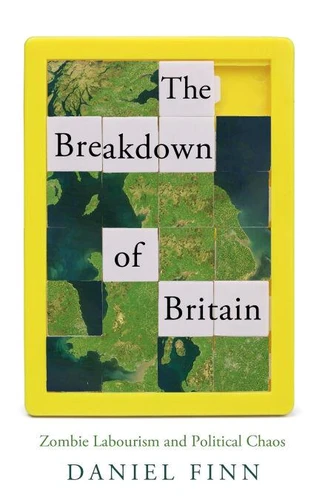
The Breakdown of Britain. Zombie Labourism and Political Chaos
Par :Formats :
Disponible dans votre compte client Decitre ou Furet du Nord dès validation de votre commande. Le format ePub protégé est :
- Compatible avec une lecture sur My Vivlio (smartphone, tablette, ordinateur)
- Compatible avec une lecture sur liseuses Vivlio
- Pour les liseuses autres que Vivlio, vous devez utiliser le logiciel Adobe Digital Edition. Non compatible avec la lecture sur les liseuses Kindle, Remarkable et Sony
- Non compatible avec un achat hors France métropolitaine
 , qui est-ce ?
Notre partenaire de plateforme de lecture numérique où vous retrouverez l'ensemble de vos ebooks gratuitement
Pour en savoir plus sur nos ebooks, consultez notre aide en ligne ici
C'est si simple ! Lisez votre ebook avec l'app Vivlio sur votre tablette, mobile ou ordinateur :

- Nombre de pages288
- Date de parution06/04/2027
- FormatePub
- ISBN978-1-80429-560-1
- EAN9781804295601
- Protection num.Adobe DRM
- Infos supplémentairesepub
- ÉditeurVerso
Résumé
What went wrong with Westminster: Britain's post-Thatcher hellscape. The Breakdown of Britain asks a simple, unsettling question: why does British politics feel permanently stuck, even after landslide elections and supposed 'resets'? Under Labour, growth has stalled, living standards remain depressed, and a government with unrivalled parliamentary power appears unable to change direction. At the same time, Nigel Farage's Reform UK has surged to unprecedented heights, dragging the political centre rightwards without even taking office.
Daniel Finn shows that this is not a temporary malfunction but the endpoint of a deeper collapse. Over the past decade - from the drive for Scottish independence to Brexit, from Corbynism's rise and fall to the implosion of the Conservative Party - the political order built after Thatcher has steadily come apart. Its institutions endure, but their capacity to deliver consent or stability does not.
Why do governments with commanding majorities seem paralysed? Why does pressure from the radical right travel so easily through the system, while challenges from the left are neutralised? And is today's drab stabilisation under Keir Starmer a resolution or merely a pause before the next upheaval? Clear-eyed and unsparing, The Breakdown of Britain explains why the crisis is not over, and why its next phase may be more dangerous than the last.
Daniel Finn shows that this is not a temporary malfunction but the endpoint of a deeper collapse. Over the past decade - from the drive for Scottish independence to Brexit, from Corbynism's rise and fall to the implosion of the Conservative Party - the political order built after Thatcher has steadily come apart. Its institutions endure, but their capacity to deliver consent or stability does not.
Why do governments with commanding majorities seem paralysed? Why does pressure from the radical right travel so easily through the system, while challenges from the left are neutralised? And is today's drab stabilisation under Keir Starmer a resolution or merely a pause before the next upheaval? Clear-eyed and unsparing, The Breakdown of Britain explains why the crisis is not over, and why its next phase may be more dangerous than the last.