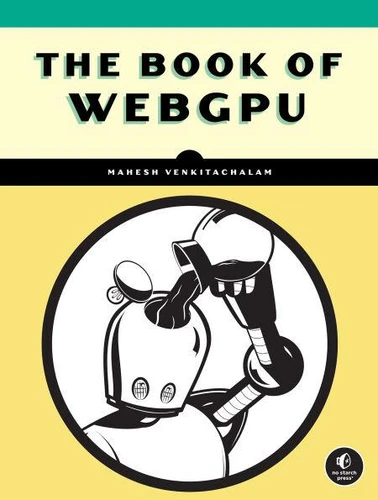
The Book of WebGPU
Par :Formats :
Disponible dans votre compte client Decitre ou Furet du Nord dès validation de votre commande. Le format ePub est :
- Compatible avec une lecture sur My Vivlio (smartphone, tablette, ordinateur)
- Compatible avec une lecture sur liseuses Vivlio
- Pour les liseuses autres que Vivlio, vous devez utiliser le logiciel Adobe Digital Edition. Non compatible avec la lecture sur les liseuses Kindle, Remarkable et Sony
 , qui est-ce ?
Notre partenaire de plateforme de lecture numérique où vous retrouverez l'ensemble de vos ebooks gratuitement
Pour en savoir plus sur nos ebooks, consultez notre aide en ligne ici
C'est si simple ! Lisez votre ebook avec l'app Vivlio sur votre tablette, mobile ou ordinateur :

- Nombre de pages400
- Date de parution23/02/2027
- FormatePub
- ISBN978-1-7185-0433-2
- EAN9781718504332
- Protection num.pas de protection
- Infos supplémentairesepub
- ÉditeurNo Starch Press
Résumé
A hands-on, JavaScript-based introduction to WebGPU for real-time 3D graphics and GPU computing in the browser. The Book of WebGPU is a hands-on introduction to modern browser-based 3D graphics and GPU computing with WebGPU and JavaScript. Readers learn how to use the WebGPU API and the WebGPU Shading Language (WGSL) to render interactive 3D scenes, implement lighting and texturing, and tap into the GPU's compute pipeline for non-graphics workloads.
The book walks through the full pipeline of creating 3D graphics in the browser, from buffers, shaders, and render passes to camera transforms and physically inspired lighting. Along the way, it reinforces core graphics concepts like coordinate spaces, projections, and materials, while also covering modern JavaScript features such as modules, promises, and async/await. Every chapter includes guided, browser-based projects and challenging exercises, from fractal visualizations and interactive lighting demos to exploring medical CT data in 3D and experimenting with GPU-accelerated computations.
As of 2025, WebGPU is officially supported across Chrome, Edge, Firefox, and Safari, so readers can run these projects in all major browsers without special plugins or native installs. The result is a complete on-ramp for developers who want to create high-performance, visually rich experiences on the web, whether for games, data visualization, design tools, or emerging AI workflows.
The book walks through the full pipeline of creating 3D graphics in the browser, from buffers, shaders, and render passes to camera transforms and physically inspired lighting. Along the way, it reinforces core graphics concepts like coordinate spaces, projections, and materials, while also covering modern JavaScript features such as modules, promises, and async/await. Every chapter includes guided, browser-based projects and challenging exercises, from fractal visualizations and interactive lighting demos to exploring medical CT data in 3D and experimenting with GPU-accelerated computations.
As of 2025, WebGPU is officially supported across Chrome, Edge, Firefox, and Safari, so readers can run these projects in all major browsers without special plugins or native installs. The result is a complete on-ramp for developers who want to create high-performance, visually rich experiences on the web, whether for games, data visualization, design tools, or emerging AI workflows.