
About 2500 years ago, the imperial archivist Lao Tzu (engl. »The old Sage« ), who was already known throughout China for his wisdom, set out to leave the increasingly shattered empire for mountain solitude. He found himself detained, though, by the border guard, who told him, he would not be allowed to leave, until he wrote down his wisdom.
This left Lao Tzu in a quandary. After all, he had diligently avoided the latter, in the knowledge of its fundamental impossibility.
According to the legend, he finally bowed to the coercion of the official and wrote down the »Tao Te Ching« (literally: »The Book of the Tao« ) in the customs house within a few days.
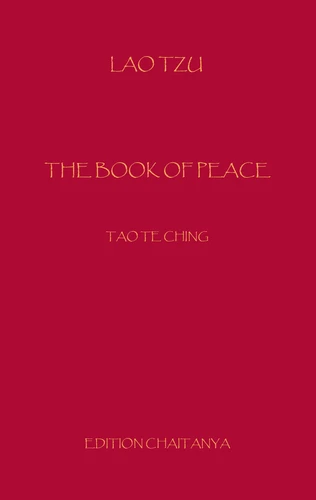
The Book of Peace. Dao Te Ching
Par :Formats :
Disponible dans votre compte client Decitre ou Furet du Nord dès validation de votre commande. Le format ePub est :
- Compatible avec une lecture sur My Vivlio (smartphone, tablette, ordinateur)
- Compatible avec une lecture sur liseuses Vivlio
- Pour les liseuses autres que Vivlio, vous devez utiliser le logiciel Adobe Digital Edition. Non compatible avec la lecture sur les liseuses Kindle, Remarkable et Sony
 , qui est-ce ?
Notre partenaire de plateforme de lecture numérique où vous retrouverez l'ensemble de vos ebooks gratuitement
Pour en savoir plus sur nos ebooks, consultez notre aide en ligne ici
C'est si simple ! Lisez votre ebook avec l'app Vivlio sur votre tablette, mobile ou ordinateur :

- Nombre de pages108
- FormatePub
- ISBN978-3-7562-6644-9
- EAN9783756266449
- Date de parution05/09/2023
- Protection num.Digital Watermarking
- Taille95 Ko
- Infos supplémentairesepub
- ÉditeurBooks on Demand
Résumé
About 2500 years ago, the imperial archivist Lao Tzu (engl. »The old Sage« ), who was already known throughout China for his wisdom, set out to leave the increasingly shattered empire for mountain solitude. He found himself detained, though, by the border guard, who told him, he would not be allowed to leave, until he wrote down his wisdom.
This left Lao Tzu in a quandary. After all, he had diligently avoided the latter, in the knowledge of its fundamental impossibility.
According to the legend, he finally bowed to the coercion of the official and wrote down the »Tao Te Ching« (literally: »The Book of the Tao« ) in the customs house within a few days.
In order to escape at least a little from this dilemma, Lao Tzu made it clear right at the beginning: »The words one can speak are not the right words.«
Because of this relativization and not least in relation to the central term »Tao« , which is considered incomprehensible, the number of versions and interpretations of the »Tao Te Ching« , now a classic of world literature, became legion.
As a makeshift, the scholars and translators commonly attributed the English terms »Meaning« and »Way« to the »Tao« . In reference of Arthur Schopenhauer, the probably most precise and articulate western intellectual ever, the translation undertaken here applies for »Tao« the simple term »The World« , which Schopenhauer characterized as the most comprehensive of all terms. As the reader will notice soon, the use of the term »World« for »Tao« , as well as the Schopenhauerian world-view as the translation-background, lends this literary soul balm a fascinating additional conciseness - timeless in its peace-inducing simplicity and closeness to life.
As a makeshift, the scholars and translators commonly attributed the English terms »Meaning« and »Way« to the »Tao« . In reference of Arthur Schopenhauer, the probably most precise and articulate western intellectual ever, the translation undertaken here applies for »Tao« the simple term »The World« , which Schopenhauer characterized as the most comprehensive of all terms. As the reader will notice soon, the use of the term »World« for »Tao« , as well as the Schopenhauerian world-view as the translation-background, lends this literary soul balm a fascinating additional conciseness - timeless in its peace-inducing simplicity and closeness to life.
A propos de Lao Tsu
9,99 €