
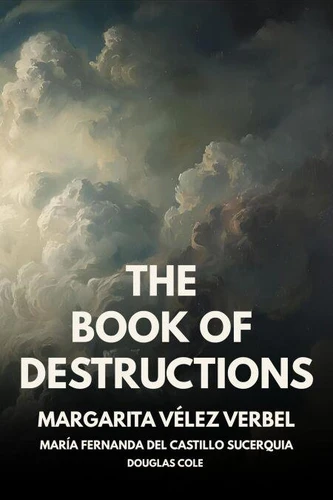
The Book of Destructions
Par :Formats :
Disponible dans votre compte client Decitre ou Furet du Nord dès validation de votre commande. Le format ePub protégé est :
- Compatible avec une lecture sur My Vivlio (smartphone, tablette, ordinateur)
- Compatible avec une lecture sur liseuses Vivlio
- Pour les liseuses autres que Vivlio, vous devez utiliser le logiciel Adobe Digital Edition. Non compatible avec la lecture sur les liseuses Kindle, Remarkable et Sony
- Non compatible avec un achat hors France métropolitaine
 , qui est-ce ?
Notre partenaire de plateforme de lecture numérique où vous retrouverez l'ensemble de vos ebooks gratuitement
Pour en savoir plus sur nos ebooks, consultez notre aide en ligne ici
C'est si simple ! Lisez votre ebook avec l'app Vivlio sur votre tablette, mobile ou ordinateur :

- FormatePub
- ISBN8235238558
- EAN9798235238558
- Date de parution31/03/2026
- Protection num.Adobe DRM
- Infos supplémentairesepub
- ÉditeurIoakim Ioakim
Résumé
In **The Book of Destructions**, Margarita Vélez Verbel dismantles the foundations of inherited power. The sacred is interrogated, the familial pedestal cracked open. Father and mother lose their mythic shine, and society emerges as a snarled, punishing knot where freedom and dignity are routinely sacrificed. Nothing holds still here. Pain burns clean through memory. God mirrors the patriarchy that worships Him.
The "destruction" at the heart of this book is the deliberate breaking of the ancient rules meant to keep women obedient, invisible, and domestic. David-the acclaimed king who felled Goliath-appears instead in his full grotesquerie: a predatory man who cloaked violence against girls in divine approval. John the Baptist-self-appointed moral sentinel-hurls "whore" at Salome's mother while ignoring the rot within his own tradition.
And in a satisfying reversal, the prophet who despised women is finally undone by a woman's whim, a poetic justice rendered with the sharp edge this book wields so well. Vélez Verbel's work is not an act of destruction for its own sake-it is a necessary breaking, a blaze set to the myths that have ruled women's bodies and lives for millennia.
The "destruction" at the heart of this book is the deliberate breaking of the ancient rules meant to keep women obedient, invisible, and domestic. David-the acclaimed king who felled Goliath-appears instead in his full grotesquerie: a predatory man who cloaked violence against girls in divine approval. John the Baptist-self-appointed moral sentinel-hurls "whore" at Salome's mother while ignoring the rot within his own tradition.
And in a satisfying reversal, the prophet who despised women is finally undone by a woman's whim, a poetic justice rendered with the sharp edge this book wields so well. Vélez Verbel's work is not an act of destruction for its own sake-it is a necessary breaking, a blaze set to the myths that have ruled women's bodies and lives for millennia.