
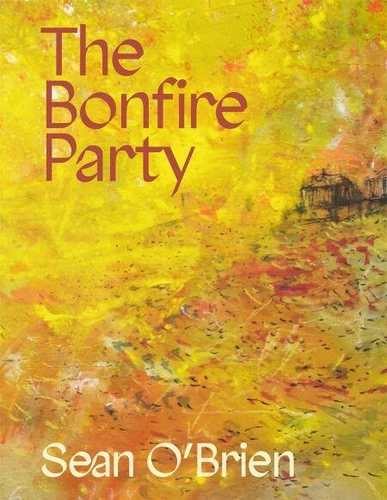
Sean O'Brien's poetry has received numerous awards, including the T. S. Eliot Prize, the Forward Prize (three times), the E. M Forster Award and the Roehampton Poetry Prize. His work has been published in several languages. He is also a novelist, critic, editor, translator, playwright and broadcaster. Born in London, he grew up in Hull. He is Professor of Creative Writing at Newcastle University and a Fellow of the Royal Society of Literature.
The Bonfire Party. from the three-time winner of The Forward Prize for Poetry
Par :Formats :
Disponible dans votre compte client Decitre ou Furet du Nord dès validation de votre commande. Le format ePub protégé est :
- Compatible avec une lecture sur My Vivlio (smartphone, tablette, ordinateur)
- Compatible avec une lecture sur liseuses Vivlio
- Pour les liseuses autres que Vivlio, vous devez utiliser le logiciel Adobe Digital Edition. Non compatible avec la lecture sur les liseuses Kindle, Remarkable et Sony
- Non compatible avec un achat hors France métropolitaine
 , qui est-ce ?
Notre partenaire de plateforme de lecture numérique où vous retrouverez l'ensemble de vos ebooks gratuitement
Pour en savoir plus sur nos ebooks, consultez notre aide en ligne ici
C'est si simple ! Lisez votre ebook avec l'app Vivlio sur votre tablette, mobile ou ordinateur :

- Nombre de pages96
- FormatePub
- ISBN978-1-0350-6491-5
- EAN9781035064915
- Date de parution08/01/2026
- Protection num.Adobe DRM
- Infos supplémentairesepub
- ÉditeurPicador
Résumé
The preoccupations of Sean O'Brien's work have for many of us become newly pressing: the recurrence of history, the shadow of war, the precariousness of a peacetime that can no longer be taken for granted. The Bonfire Party, Forward Prize winner Sean O'Brien's twelfth poetry collection, takes its title from Eric Ravilious's 1930s painting, where some revellers watch the flames, while others feed them or run towards them, in a scene of 'mythic Englishness'.
In these poems, the long view afforded by experience results in a truer representation of our predicament and a regretful understanding of human culpability. Just as times and places flow together to create a shifting, at times visionary perspective, so too do the presences of those we have lost, 'love and death consorting as they must'. In a central sequence - a departure for O'Brien - he writes into the rich imaginative climate of George Simenon's Maigret novels.
These poems, both 'homage and transposition', effect a poetic communion of sorts with the physical world and moral atmospheres encountered by the inscrutable detective and his creator. The working of the imagination itself has become O'Brien's true subject, where the fact of the world and the imagined order of literature and art begin to merge.
In these poems, the long view afforded by experience results in a truer representation of our predicament and a regretful understanding of human culpability. Just as times and places flow together to create a shifting, at times visionary perspective, so too do the presences of those we have lost, 'love and death consorting as they must'. In a central sequence - a departure for O'Brien - he writes into the rich imaginative climate of George Simenon's Maigret novels.
These poems, both 'homage and transposition', effect a poetic communion of sorts with the physical world and moral atmospheres encountered by the inscrutable detective and his creator. The working of the imagination itself has become O'Brien's true subject, where the fact of the world and the imagined order of literature and art begin to merge.
A propos de Sean O'Brien

Embark
E-book
12,99 €

Fuel
E-book
9,49 €
It Says Here
E-book
12,99 €
Europa
E-book
11,99 €
10,99 €
11,99 €
15,70 €

The Beautiful Librarians
E-book
11,99 €
Collected Poems
E-book
15,99 €
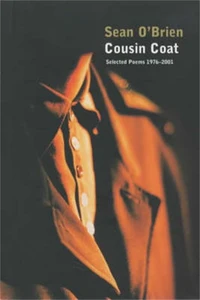
11,99 €
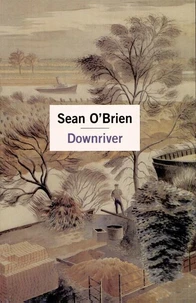
Downriver
E-book
10,99 €
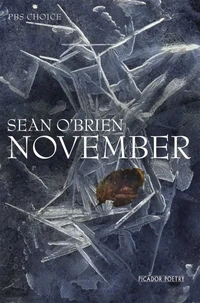
November
E-book
11,99 €
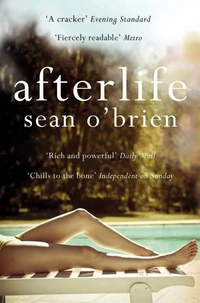
Afterlife
E-book
10,99 €