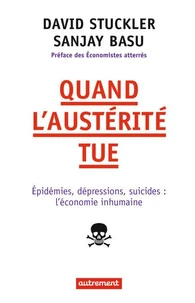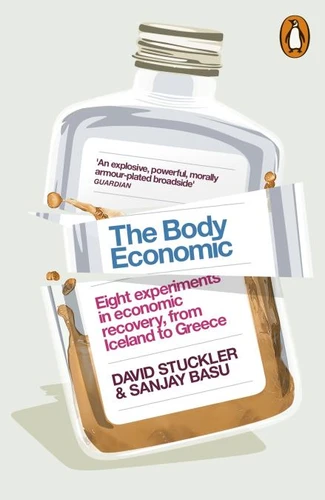
The Body Economic. Eight experiments in economic recovery, from Iceland to Greece
Par : ,Formats :
Disponible dans votre compte client Decitre ou Furet du Nord dès validation de votre commande. Le format ePub protégé est :
- Compatible avec une lecture sur My Vivlio (smartphone, tablette, ordinateur)
- Compatible avec une lecture sur liseuses Vivlio
- Pour les liseuses autres que Vivlio, vous devez utiliser le logiciel Adobe Digital Edition. Non compatible avec la lecture sur les liseuses Kindle, Remarkable et Sony
- Non compatible avec un achat hors France métropolitaine
 , qui est-ce ?
Notre partenaire de plateforme de lecture numérique où vous retrouverez l'ensemble de vos ebooks gratuitement
Pour en savoir plus sur nos ebooks, consultez notre aide en ligne ici
C'est si simple ! Lisez votre ebook avec l'app Vivlio sur votre tablette, mobile ou ordinateur :

- Nombre de pages256
- FormatePub
- ISBN978-0-14-197603-7
- EAN9780141976037
- Date de parution21/05/2013
- Protection num.Adobe DRM
- Infos supplémentairesepub
- ÉditeurPENGUIN
Résumé
The global financial crisis has had a seismic impact upon the wealth of nations. But we have little sense of how it affects one of the most fundamental issues of all: our physical and mental health. This highly significant new book, based on the authors' own groundbreaking research, looks at the daily lives of people affected by financial crisis, from the Great Depression of the 1930s, to post-communist Russia, to the US foreclosure crisis of the late 2000s.
Why, it asks, did Sweden experience a fall in suicides during its banking crisis? What triggered a mosquito-borne epidemic in California in 2007? What caused 10 million Russian men to 'disappear' in the 1990s? Why is Greece experiencing rocketing HIV rates? And how did the health of Americans actually improve during the catastrophic crisis of the 1930s? The conclusions it draws are both surprising and compelling: remarkably, when faced with similar crises, the health of some societies - like Iceland - improves, while that of others, such as Greece, deteriorates.
Even amid the worst economic disasters, negative public health effects are not inevitable: it's how communities respond to challenges of debt and market turmoil that counts. The Body Economic puts forward a radical proposition. Austerity, it argues, is seriously bad for your health. We can prevent financial crises from becoming epidemics, but to do so, we must acknowledge what the hard data tells us: that, throughout history, there is a causal link between the strength of a community's health and its social protection systems.
Now and for generations to come, our commitment to the building of fairer, more equal societies will determine the health of our body economic.
Why, it asks, did Sweden experience a fall in suicides during its banking crisis? What triggered a mosquito-borne epidemic in California in 2007? What caused 10 million Russian men to 'disappear' in the 1990s? Why is Greece experiencing rocketing HIV rates? And how did the health of Americans actually improve during the catastrophic crisis of the 1930s? The conclusions it draws are both surprising and compelling: remarkably, when faced with similar crises, the health of some societies - like Iceland - improves, while that of others, such as Greece, deteriorates.
Even amid the worst economic disasters, negative public health effects are not inevitable: it's how communities respond to challenges of debt and market turmoil that counts. The Body Economic puts forward a radical proposition. Austerity, it argues, is seriously bad for your health. We can prevent financial crises from becoming epidemics, but to do so, we must acknowledge what the hard data tells us: that, throughout history, there is a causal link between the strength of a community's health and its social protection systems.
Now and for generations to come, our commitment to the building of fairer, more equal societies will determine the health of our body economic.