SOLDES
Jusqu'à -70% sur une sélection d'articles*

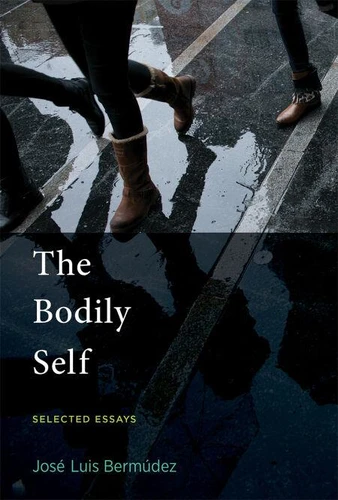
The Bodily Self. Selected Essays
Par :Formats :
Disponible dans votre compte client Decitre ou Furet du Nord dès validation de votre commande. Le format ePub protégé est :
- Compatible avec une lecture sur My Vivlio (smartphone, tablette, ordinateur)
- Compatible avec une lecture sur liseuses Vivlio
- Pour les liseuses autres que Vivlio, vous devez utiliser le logiciel Adobe Digital Edition. Non compatible avec la lecture sur les liseuses Kindle, Remarkable et Sony
- Non compatible avec un achat hors France métropolitaine
 , qui est-ce ?
Notre partenaire de plateforme de lecture numérique où vous retrouverez l'ensemble de vos ebooks gratuitement
Pour en savoir plus sur nos ebooks, consultez notre aide en ligne ici
C'est si simple ! Lisez votre ebook avec l'app Vivlio sur votre tablette, mobile ou ordinateur :

- Nombre de pages312
- FormatePub
- ISBN978-0-262-34467-8
- EAN9780262344678
- Date de parution23/02/2018
- Protection num.Adobe DRM
- Taille926 Ko
- Infos supplémentairesepub
- ÉditeurThe MIT Press
Résumé
Essays on the role of the body in self-consciousness, showing that full-fledged, linguistic self-consciousness is built on a rich foundation of primitive, nonconceptual self-consciousness. These essays explore how the rich and sophisticated forms of self-consciousness with which we are most familiar-as philosophers, psychologists, and as ordinary, reflective individuals-depend on a complex underpinning that has been largely invisible to students of the self and self-consciousness.
José Luis Bermúdez, extending the insights of his groundbreaking 1998 book, The Paradox of Self-Consciousness, argues that full-fledged, linguistic self-consciousness is built on a rich foundation of primitive, nonconceptual self-consciousness, and that these more primitive forms of self-consciousness persist in ways that frame self-conscious thought. They extend throughout the animal kingdom, and some are present in newborn human infants.
Bermúdez makes the case that these primitive forms of self-awareness can indeed be described as forms of self-consciousness, arguing that they share certain structural and epistemological features with full-fledged, linguistic self-consciousness. He offers accounts of certain important classes of states of nonconceptual content, including the self-specifying dimension of visual perception and the content of bodily awareness, considering how they represent the self.
And he explores the general role of nonconceptual self-consciousness in our cognitive and affective lives, examining in several essays the relation between nonconceptual awareness of our bodies and what has been called our "sense of ownership" for our own bodies.
José Luis Bermúdez, extending the insights of his groundbreaking 1998 book, The Paradox of Self-Consciousness, argues that full-fledged, linguistic self-consciousness is built on a rich foundation of primitive, nonconceptual self-consciousness, and that these more primitive forms of self-consciousness persist in ways that frame self-conscious thought. They extend throughout the animal kingdom, and some are present in newborn human infants.
Bermúdez makes the case that these primitive forms of self-awareness can indeed be described as forms of self-consciousness, arguing that they share certain structural and epistemological features with full-fledged, linguistic self-consciousness. He offers accounts of certain important classes of states of nonconceptual content, including the self-specifying dimension of visual perception and the content of bodily awareness, considering how they represent the self.
And he explores the general role of nonconceptual self-consciousness in our cognitive and affective lives, examining in several essays the relation between nonconceptual awareness of our bodies and what has been called our "sense of ownership" for our own bodies.