Nouveauté
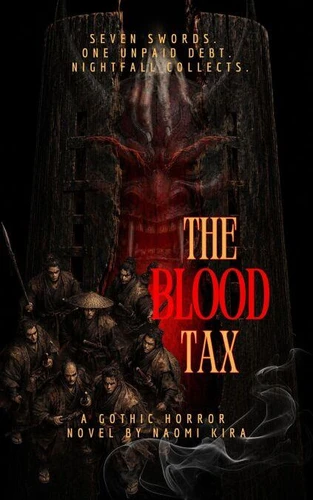
The Blood Tax
Par :Formats :
Disponible dans votre compte client Decitre ou Furet du Nord dès validation de votre commande. Le format ePub est :
- Compatible avec une lecture sur My Vivlio (smartphone, tablette, ordinateur)
- Compatible avec une lecture sur liseuses Vivlio
- Pour les liseuses autres que Vivlio, vous devez utiliser le logiciel Adobe Digital Edition. Non compatible avec la lecture sur les liseuses Kindle, Remarkable et Sony
 , qui est-ce ?
Notre partenaire de plateforme de lecture numérique où vous retrouverez l'ensemble de vos ebooks gratuitement
Pour en savoir plus sur nos ebooks, consultez notre aide en ligne ici
C'est si simple ! Lisez votre ebook avec l'app Vivlio sur votre tablette, mobile ou ordinateur :

- FormatePub
- ISBN8235684096
- EAN9798235684096
- Date de parution03/08/2026
- Protection num.pas de protection
- Infos supplémentairesepub
- ÉditeurIoakim Ioakim
Résumé
Keio 1, 1865. Seven masterless samurai arrive in an isolated mountain village expecting a human fight. The villagers claim armed collectors are coming to seize an unpaid debt. The truth is worse. For generations, the village has purchased safety and rich harvests from an immortal mountain household by surrendering one daughter from the same family as its hereditary Blood Tax. This year, the chosen family refused.
Fusa Kobayashi fled with her husband and daughter, Kinu, through a forbidden passage beneath the village shrine. In escaping, they damaged the ancient covenant that kept the blood-drinking dead outside. Desperate to conceal what has happened, the village elders hire seven passing ronin to stop the men sent from the mountain. The ronin win. By sunset, they understand they have killed the wrong men.
The slain retainers came to repair the shrine and restore the protections holding their dead masters back. Now the boundary is failing. The first wet footprints begin inside the village. Bodies rise with the habits of their former lives. Starved things crawl over roofs and force themselves through narrow openings. Those allowed to feed become faster, stronger, more articulate, and more human in appearance.
Every wound costs them blood. Every victim gives them more. As the night deepens, each protection collapses in turn. Public ground is breached. Houses stop holding. Village blood loses its safety. The dead create new members of their household. At last, the ancient lord is permitted to enter. He has not come to destroy the village. He has come to reclaim his property. Roads close. Roofs burn. Irrigation channels flood.
Water, oil, arrows, cloth, grain, farm tools, and human strength become as valuable as swords. The seven ronin are worn down by wounds that do not reset and the knowledge that the village hired them to defend a system it never intended to explain. Some fight to destroy it. Others believe restoring the sacrifice may be the only way anyone survives. At the center of the siege stands Kinu, named as the payment but denied the authority to surrender herself.
Her mother alone can renew the covenant. The village that raised them now needs Fusa's hand, Kinu's body, and the mountain lord's protection more than it needs either woman's consent. Before dawn, the survivors must choose between two terrible acts: restore the Blood Tax and save the village, or destroy the covenant and face everything it has held back. But ending the bargain will not make the dead disappear.
THE BLOOD TAX is a fast, graphic historical survival-horror novel about seven ronin, an inherited sacrifice, and a village forced to decide whether protection is worth becoming property. Set in late-Tokugawa Japan, it combines brutal siege action, vampire horror, Gothic inheritance, and moral conflict with the material reality of grain, water, labor, records, weapons, and wounds. For readers who want intelligent monsters, consequential violence, and compromised heroes, THE BLOOD TAX asks what people will preserve when an unjust system truly keeps them safe, whose body will pay for that safety, and what remains after the protection is broken.
Fusa Kobayashi fled with her husband and daughter, Kinu, through a forbidden passage beneath the village shrine. In escaping, they damaged the ancient covenant that kept the blood-drinking dead outside. Desperate to conceal what has happened, the village elders hire seven passing ronin to stop the men sent from the mountain. The ronin win. By sunset, they understand they have killed the wrong men.
The slain retainers came to repair the shrine and restore the protections holding their dead masters back. Now the boundary is failing. The first wet footprints begin inside the village. Bodies rise with the habits of their former lives. Starved things crawl over roofs and force themselves through narrow openings. Those allowed to feed become faster, stronger, more articulate, and more human in appearance.
Every wound costs them blood. Every victim gives them more. As the night deepens, each protection collapses in turn. Public ground is breached. Houses stop holding. Village blood loses its safety. The dead create new members of their household. At last, the ancient lord is permitted to enter. He has not come to destroy the village. He has come to reclaim his property. Roads close. Roofs burn. Irrigation channels flood.
Water, oil, arrows, cloth, grain, farm tools, and human strength become as valuable as swords. The seven ronin are worn down by wounds that do not reset and the knowledge that the village hired them to defend a system it never intended to explain. Some fight to destroy it. Others believe restoring the sacrifice may be the only way anyone survives. At the center of the siege stands Kinu, named as the payment but denied the authority to surrender herself.
Her mother alone can renew the covenant. The village that raised them now needs Fusa's hand, Kinu's body, and the mountain lord's protection more than it needs either woman's consent. Before dawn, the survivors must choose between two terrible acts: restore the Blood Tax and save the village, or destroy the covenant and face everything it has held back. But ending the bargain will not make the dead disappear.
THE BLOOD TAX is a fast, graphic historical survival-horror novel about seven ronin, an inherited sacrifice, and a village forced to decide whether protection is worth becoming property. Set in late-Tokugawa Japan, it combines brutal siege action, vampire horror, Gothic inheritance, and moral conflict with the material reality of grain, water, labor, records, weapons, and wounds. For readers who want intelligent monsters, consequential violence, and compromised heroes, THE BLOOD TAX asks what people will preserve when an unjust system truly keeps them safe, whose body will pay for that safety, and what remains after the protection is broken.