SOLDES
Jusqu'à -70% sur une sélection d'articles*

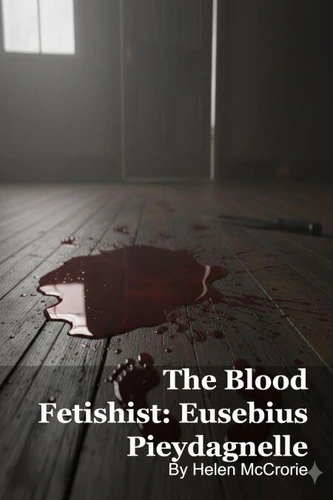
The Blood Fetishist: Eusebius Pieydagnelle
Par :Formats :
Disponible dans votre compte client Decitre ou Furet du Nord dès validation de votre commande. Le format ePub est :
- Compatible avec une lecture sur My Vivlio (smartphone, tablette, ordinateur)
- Compatible avec une lecture sur liseuses Vivlio
- Pour les liseuses autres que Vivlio, vous devez utiliser le logiciel Adobe Digital Edition. Non compatible avec la lecture sur les liseuses Kindle, Remarkable et Sony
 , qui est-ce ?
Notre partenaire de plateforme de lecture numérique où vous retrouverez l'ensemble de vos ebooks gratuitement
Pour en savoir plus sur nos ebooks, consultez notre aide en ligne ici
C'est si simple ! Lisez votre ebook avec l'app Vivlio sur votre tablette, mobile ou ordinateur :

- FormatePub
- ISBN8232893071
- EAN9798232893071
- Date de parution10/12/2025
- Protection num.pas de protection
- Infos supplémentairesepub
- ÉditeurDraft2Digital
Résumé
The Blood Fetishist: Eusebius PieydagnelleThe Blood Fetishist analyzes the foundational case of Eusebius Pieydagnelle, the 1870s French killer whose sexual arousal by blood ("hematolagnia" or "vampiric lust-murder") made his case pivotal to the emerging science of sexual psychopathology. The book details Pieydagnelle's life, his strategic choice to work as a butcher, the crisis that precipitated his serial murders, his capture, detailed confession, trial, and execution (correcting the myth of it being the last public execution in France).
It traces how sexologists like Krafft-Ebing, Ellis, and Hirschfeld used Pieydagnelle to advance theories ranging from degeneration and biological determinism to modern paraphilia frameworks. The book grapples with the ethical tension of focusing on the notorious perpetrator while the victims are forgotten, and applies contemporary DSM-5 and neuroscience frameworks to the historical case. Ultimately, the work explores what Pieydagnelle's transformation into a cultural archetype reveals about how societies understand and grapple with extreme sexual violence, demonstrating the enduring challenge and moral complexity of studying such cases.
This is the first comprehensive English-language treatment, drawing on forensic, medical, and criminological archives.
It traces how sexologists like Krafft-Ebing, Ellis, and Hirschfeld used Pieydagnelle to advance theories ranging from degeneration and biological determinism to modern paraphilia frameworks. The book grapples with the ethical tension of focusing on the notorious perpetrator while the victims are forgotten, and applies contemporary DSM-5 and neuroscience frameworks to the historical case. Ultimately, the work explores what Pieydagnelle's transformation into a cultural archetype reveals about how societies understand and grapple with extreme sexual violence, demonstrating the enduring challenge and moral complexity of studying such cases.
This is the first comprehensive English-language treatment, drawing on forensic, medical, and criminological archives.