
Ian Duhig worked with homeless people for fifteen years before becoming a writer and he is still actively involved with minority and marginalised groups on artistic projects. A Fellow of the Royal Society of Literature and Cholmondeley Award recipient, Duhig has won the Forward Best Poem Prize once, the National Poetry Competition twice and been shortlisted for the T. S Eliot Prize four times. He lives in Leeds with his wife Jane.
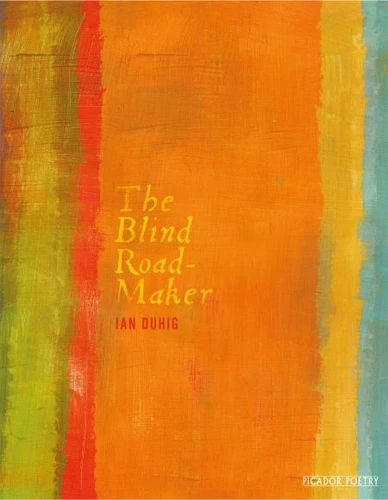
The Blind Roadmaker
Par :Formats :
Disponible dans votre compte client Decitre ou Furet du Nord dès validation de votre commande. Le format ePub protégé est :
- Compatible avec une lecture sur My Vivlio (smartphone, tablette, ordinateur)
- Compatible avec une lecture sur liseuses Vivlio
- Pour les liseuses autres que Vivlio, vous devez utiliser le logiciel Adobe Digital Edition. Non compatible avec la lecture sur les liseuses Kindle, Remarkable et Sony
- Non compatible avec un achat hors France métropolitaine
 , qui est-ce ?
Notre partenaire de plateforme de lecture numérique où vous retrouverez l'ensemble de vos ebooks gratuitement
Pour en savoir plus sur nos ebooks, consultez notre aide en ligne ici
C'est si simple ! Lisez votre ebook avec l'app Vivlio sur votre tablette, mobile ou ordinateur :

- Nombre de pages80
- FormatePub
- ISBN978-1-5098-0982-0
- EAN9781509809820
- Date de parution11/02/2016
- Protection num.Adobe DRM
- Infos supplémentairesepub
- ÉditeurPicador
Résumé
If the starting point for a number of poems in Ian Duhig's richly varied new collection is Sterne's Tristram Shandy, its presiding genius is the great eighteenth-century civil engineer, fiddler and polymath Blind Jack Metcalf - whose life Duhig here celebrates, and from whose example he draws great inspiration. Writing with an almost Burnsian eclecticism, Duhig explores urban poverty, determinism, social justice and the consolations of poetry and music on a journey that takes in everything from a riotous reimagining of Don Juan to the tragedy of Manuel Bravo (the Leeds asylum seeker from Angola who was forced to defend himself in court, and later took his own life).
No poet today writes with such a sense of political and social conscience, and The Blind Roadmaker affirms Duhig's belief in poetry as a means of commemorating those who least deserve to be forgotten.
No poet today writes with such a sense of political and social conscience, and The Blind Roadmaker affirms Duhig's belief in poetry as a means of commemorating those who least deserve to be forgotten.
A propos de Ian Duhig
New and Selected Poems
E-book
15,99 €
The Lammas Hireling
E-book
10,99 €
The Speed of Dark
E-book
10,99 €
Pandorama
E-book
10,99 €