
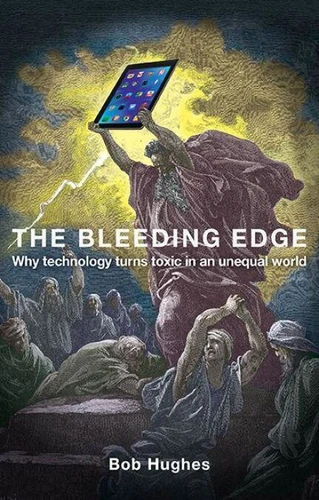
The Bleeding Edge. Why Technology Turns Toxic in an Unequal World
Par :Formats :
Disponible dans votre compte client Decitre ou Furet du Nord dès validation de votre commande. Le format ePub est :
- Compatible avec une lecture sur My Vivlio (smartphone, tablette, ordinateur)
- Compatible avec une lecture sur liseuses Vivlio
- Pour les liseuses autres que Vivlio, vous devez utiliser le logiciel Adobe Digital Edition. Non compatible avec la lecture sur les liseuses Kindle, Remarkable et Sony
 , qui est-ce ?
Notre partenaire de plateforme de lecture numérique où vous retrouverez l'ensemble de vos ebooks gratuitement
Pour en savoir plus sur nos ebooks, consultez notre aide en ligne ici
C'est si simple ! Lisez votre ebook avec l'app Vivlio sur votre tablette, mobile ou ordinateur :

- Nombre de pages368
- FormatePub
- ISBN978-1-77113-291-6
- EAN9781771132916
- Date de parution20/10/2016
- Protection num.Digital Watermarking
- Taille2 Mo
- Infos supplémentairesepub
- ÉditeurBetween the Lines
Résumé
It's hammered into us from birth that 'all good things come at a price'. Today, that price looks apocalyptic, with wars, exploitation and environmental collapse in every part of the globe. Some suggest that the carnage is "a price worth paying" for technological progress. No pain, no gain. But technology is precisely the business of minimising the costs and impacts of existence. and by whole orders of magnitude.
By now, all human beings should be leading creative, leisure-filled lives in a pristine world of burgeoning diversity. So how did it go so wrong? In a word, inequality. In The Bleeding Edge, Bob Hughes argues that unequal societies are incapable of using new technologies well. Wherever elites exist, self-preservation decrees that they must take control of new technologies to protect and entrench their status, rather than satisfy people's needs.
Hughes pursues the latest discoveries about the effects of social inequality on human health, into the field of human environmental impact, and traces today's ecological crisis back to the rise of the world's first elites, 5, 000 years ago. He argues that new technologies have never emerged from elites or from the clash of competitive forces, but from largely voluntary, egalitarian collaborations of the kind that produced the world's first working computers.
Finally, Hughes shows that an egalitarian world is not 'pie in the sky' but our evolutionary homeland, the glue that holds societies together, and the "cradle of invention" from which all our best ideas emerge. The book concludes: 'Let's assume that the commitment to human equality that's written into the Universal Declaration of Human Rights means exactly what it says, and take it from there.'
By now, all human beings should be leading creative, leisure-filled lives in a pristine world of burgeoning diversity. So how did it go so wrong? In a word, inequality. In The Bleeding Edge, Bob Hughes argues that unequal societies are incapable of using new technologies well. Wherever elites exist, self-preservation decrees that they must take control of new technologies to protect and entrench their status, rather than satisfy people's needs.
Hughes pursues the latest discoveries about the effects of social inequality on human health, into the field of human environmental impact, and traces today's ecological crisis back to the rise of the world's first elites, 5, 000 years ago. He argues that new technologies have never emerged from elites or from the clash of competitive forces, but from largely voluntary, egalitarian collaborations of the kind that produced the world's first working computers.
Finally, Hughes shows that an egalitarian world is not 'pie in the sky' but our evolutionary homeland, the glue that holds societies together, and the "cradle of invention" from which all our best ideas emerge. The book concludes: 'Let's assume that the commitment to human equality that's written into the Universal Declaration of Human Rights means exactly what it says, and take it from there.'