The Birth of a Nation. How a Legendary Filmmaker and a Crusading Editor Reignited America's Civil War
Par :Formats :
Disponible dans votre compte client Decitre ou Furet du Nord dès validation de votre commande. Le format ePub protégé est :
- Compatible avec une lecture sur My Vivlio (smartphone, tablette, ordinateur)
- Compatible avec une lecture sur liseuses Vivlio
- Pour les liseuses autres que Vivlio, vous devez utiliser le logiciel Adobe Digital Edition. Non compatible avec la lecture sur les liseuses Kindle, Remarkable et Sony
- Non compatible avec un achat hors France métropolitaine
 , qui est-ce ?
Notre partenaire de plateforme de lecture numérique où vous retrouverez l'ensemble de vos ebooks gratuitement
Pour en savoir plus sur nos ebooks, consultez notre aide en ligne ici
C'est si simple ! Lisez votre ebook avec l'app Vivlio sur votre tablette, mobile ou ordinateur :

- Nombre de pages368
- FormatePub
- ISBN978-1-61039-824-4
- EAN9781610398244
- Date de parution09/01/2017
- Protection num.Adobe DRM
- Infos supplémentairesepub
- ÉditeurPublicAffairs
Résumé
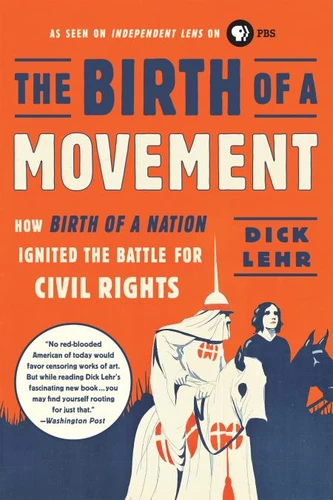
In 1915, two men -- one a journalist agitator, the other a technically brilliant filmmaker -- incited a public confrontation that roiled America, pitting black against white, Hollywood against Boston, and free speech against civil rights. Monroe Trotter and D. W. Griffith were fighting over a film that dramatized the Civil War and Reconstruction in a post-Confederate South. Almost fifty years earlier, Monroe's father, James, was a sergeant in an all-black Union regiment that marched into Charleston, South Carolina, just as the Kentucky cavalry -- including Roaring Jack Griffith, D.
W.'s father -- fled for their lives. Griffith's film, The Birth of a Nation, included actors in blackface, heroic portraits of Knights of the Ku Klux Klan, and a depiction of Lincoln's assassination. Freed slaves were portrayed as villainous, vengeful, slovenly, and dangerous to the sanctity of American values. It was tremendously successful, eventually seen by 25 million Americans. But violent protests against the film flared up across the country.
Monroe Trotter's titanic crusade to have the film censored became a blueprint for dissent during the 1950s and 1960s. This is the fiery story of a revolutionary moment for mass media and the nascent civil rights movement, and the men clashing over the cultural and political soul of a still-young America standing at the cusp of its greatest days.
W.'s father -- fled for their lives. Griffith's film, The Birth of a Nation, included actors in blackface, heroic portraits of Knights of the Ku Klux Klan, and a depiction of Lincoln's assassination. Freed slaves were portrayed as villainous, vengeful, slovenly, and dangerous to the sanctity of American values. It was tremendously successful, eventually seen by 25 million Americans. But violent protests against the film flared up across the country.
Monroe Trotter's titanic crusade to have the film censored became a blueprint for dissent during the 1950s and 1960s. This is the fiery story of a revolutionary moment for mass media and the nascent civil rights movement, and the men clashing over the cultural and political soul of a still-young America standing at the cusp of its greatest days.
A propos de Dick Lehr

Messe noire
E-book
12,99 €
Whitey
E-book
12,99 €