SOLDES
Jusqu'à -70% sur une sélection d'articles*

Nouveauté
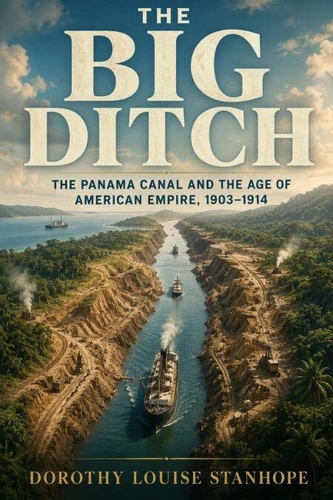
the big ditch. The Panama Canal and the Age of American Empire, 1903-1914
Par :Formats :
Disponible dans votre compte client Decitre ou Furet du Nord dès validation de votre commande. Le format ePub est :
- Compatible avec une lecture sur My Vivlio (smartphone, tablette, ordinateur)
- Compatible avec une lecture sur liseuses Vivlio
- Pour les liseuses autres que Vivlio, vous devez utiliser le logiciel Adobe Digital Edition. Non compatible avec la lecture sur les liseuses Kindle, Remarkable et Sony
 , qui est-ce ?
Notre partenaire de plateforme de lecture numérique où vous retrouverez l'ensemble de vos ebooks gratuitement
Pour en savoir plus sur nos ebooks, consultez notre aide en ligne ici
C'est si simple ! Lisez votre ebook avec l'app Vivlio sur votre tablette, mobile ou ordinateur :

- FormatePub
- ISBN8905168468
- EAN9798905168468
- Date de parution02/06/2026
- Protection num.pas de protection
- Taille1 Mo
- Infos supplémentairesepub
- ÉditeurChiify
Résumé
Panama Canal history - American empire, engineering triumph, and the human cost of the Big Ditch, 1903-1914. The complete narrative of how the United States built the canal, sponsored a revolution, and created a colonial zone.
In 1880, Ferdinand de Lesseps arrived in Panama with the reputation of the man who had joined two seas at Suez. Within nine years his company had spent more than $800 million, killed an estimated 22, 000 workers, and collapsed in bankruptcy and criminal fraud.
De Lesseps died in 1894 with his name in ruins. The French failure left behind cleared jungle, preliminary excavations, and the question that would define American foreign policy: who would finish the canal? Dorothy Louise Stanhope's narrative answers that across twenty-four chapters, from the 1903 Hay-Herran Treaty and Theodore Roosevelt's American-sponsored Panamanian revolution through Colonel Gorgas's mosquito-eradication campaign, Goethals's military engineering command, and the August 1914 opening - overshadowed by a war in Europe that had just begun.
The book traces American empire-building at its most confident: naming the engineers who built the canal, the West Indian workers who paid the human cost, and the Panamanians whose sovereignty was subordinated to American strategic ambition. Inside this Panama Canal history: The French failure - de Lesseps's sea-level design killed 22, 000 workers and bankrupted in 1889, leaving excavations an American project would build on (Chapter 1) Roosevelt's revolution - Colombia's refusal of the Hay-Herran Treaty, American warships, and instant recognition of a new Panamanian state in 1903 (Chapters 3-4) Gorgas and the medical miracle - how identifying the Aedes aegypti mosquito as yellow fever's vector, proven in Cuba in 1900, transformed the isthmus from death trap to construction site (Chapter 5) The Silver and Gold Rolls - the canal zone's racial hierarchy: West Indian workers dying at three times the rate of American workers, building a structure whose sovereignty their descendants would reclaim (Chapters 9-11) The Culebra Cut - digging through the Continental Divide against slides that refilled months of excavation; official death toll 5, 609 - almost certainly an undercount (Chapters 7, 12) The 1964 Flag Riots and the Torrijos-Carter Treaties - how Panamanian nationalism, born in colonial resentment, forced the handover on December 31, 1999 (Chapters 19-20) The canal that opened in 1914 was built on a staged coup and constructed by a racially stratified workforce whose West Indian laborers are still being written back into the story.
Stanhope's Panama Canal history recovers both the engineering triumph and the imperial cost. For readers of David McCullough's THE PATH BETWEEN THE SEAS and Matthew Parker's HELL'S GORGE.
De Lesseps died in 1894 with his name in ruins. The French failure left behind cleared jungle, preliminary excavations, and the question that would define American foreign policy: who would finish the canal? Dorothy Louise Stanhope's narrative answers that across twenty-four chapters, from the 1903 Hay-Herran Treaty and Theodore Roosevelt's American-sponsored Panamanian revolution through Colonel Gorgas's mosquito-eradication campaign, Goethals's military engineering command, and the August 1914 opening - overshadowed by a war in Europe that had just begun.
The book traces American empire-building at its most confident: naming the engineers who built the canal, the West Indian workers who paid the human cost, and the Panamanians whose sovereignty was subordinated to American strategic ambition. Inside this Panama Canal history: The French failure - de Lesseps's sea-level design killed 22, 000 workers and bankrupted in 1889, leaving excavations an American project would build on (Chapter 1) Roosevelt's revolution - Colombia's refusal of the Hay-Herran Treaty, American warships, and instant recognition of a new Panamanian state in 1903 (Chapters 3-4) Gorgas and the medical miracle - how identifying the Aedes aegypti mosquito as yellow fever's vector, proven in Cuba in 1900, transformed the isthmus from death trap to construction site (Chapter 5) The Silver and Gold Rolls - the canal zone's racial hierarchy: West Indian workers dying at three times the rate of American workers, building a structure whose sovereignty their descendants would reclaim (Chapters 9-11) The Culebra Cut - digging through the Continental Divide against slides that refilled months of excavation; official death toll 5, 609 - almost certainly an undercount (Chapters 7, 12) The 1964 Flag Riots and the Torrijos-Carter Treaties - how Panamanian nationalism, born in colonial resentment, forced the handover on December 31, 1999 (Chapters 19-20) The canal that opened in 1914 was built on a staged coup and constructed by a racially stratified workforce whose West Indian laborers are still being written back into the story.
Stanhope's Panama Canal history recovers both the engineering triumph and the imperial cost. For readers of David McCullough's THE PATH BETWEEN THE SEAS and Matthew Parker's HELL'S GORGE.