SOLDES
Jusqu'à -70% sur une sélection d'articles*

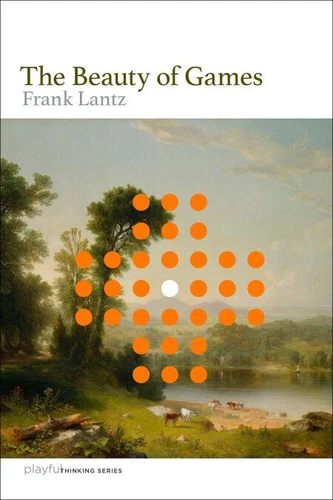
The Beauty of Games
Par :Formats :
Disponible dans votre compte client Decitre ou Furet du Nord dès validation de votre commande. Le format ePub protégé est :
- Compatible avec une lecture sur My Vivlio (smartphone, tablette, ordinateur)
- Compatible avec une lecture sur liseuses Vivlio
- Pour les liseuses autres que Vivlio, vous devez utiliser le logiciel Adobe Digital Edition. Non compatible avec la lecture sur les liseuses Kindle, Remarkable et Sony
- Non compatible avec un achat hors France métropolitaine
 , qui est-ce ?
Notre partenaire de plateforme de lecture numérique où vous retrouverez l'ensemble de vos ebooks gratuitement
Pour en savoir plus sur nos ebooks, consultez notre aide en ligne ici
C'est si simple ! Lisez votre ebook avec l'app Vivlio sur votre tablette, mobile ou ordinateur :

- Nombre de pages184
- FormatePub
- ISBN978-0-262-37630-3
- EAN9780262376303
- Date de parution03/10/2023
- Protection num.Adobe DRM
- Taille2 Mo
- Infos supplémentairesepub
- ÉditeurThe MIT Press
Résumé
How games create beauty and meaning, and how we can use them to explore the aesthetics of thought. Are games art? This question is a dominant mode of thinking about games and play in the twenty-first century, but it is fundamentally the wrong question. Instead, Frank Lantz proposes in his provocative new book, The Beauty of Games, that we think about games and how they create meaning through the lens of the aesthetic.
We should think of games, he writes, the same way we think about literature, theater, or music-as a form that ranges from deep and profound to easy and disposable, and everything in between. Games are the aesthetic form of interactive systems, a set of possibilities connected by rules of cause and effect. In this book, Lantz analyzes games from chess to poker to tennis to understand how games create beauty and evoke a deeper meaning.
He suggests that we think of games not only as hyper-modern objects but also as forms within the ancient context of artistic production, encompassing all of the nebulous and ephemeral qualities of the aesthetic experience.
We should think of games, he writes, the same way we think about literature, theater, or music-as a form that ranges from deep and profound to easy and disposable, and everything in between. Games are the aesthetic form of interactive systems, a set of possibilities connected by rules of cause and effect. In this book, Lantz analyzes games from chess to poker to tennis to understand how games create beauty and evoke a deeper meaning.
He suggests that we think of games not only as hyper-modern objects but also as forms within the ancient context of artistic production, encompassing all of the nebulous and ephemeral qualities of the aesthetic experience.