SOLDES
Jusqu'à -70% sur une sélection d'articles*

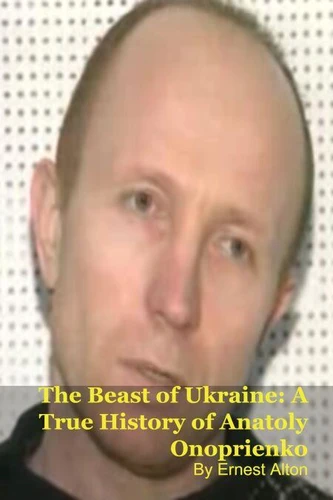
The Beast of Ukraine: A True History of Anatoly Onoprienko
Par :Formats :
Disponible dans votre compte client Decitre ou Furet du Nord dès validation de votre commande. Le format ePub est :
- Compatible avec une lecture sur My Vivlio (smartphone, tablette, ordinateur)
- Compatible avec une lecture sur liseuses Vivlio
- Pour les liseuses autres que Vivlio, vous devez utiliser le logiciel Adobe Digital Edition. Non compatible avec la lecture sur les liseuses Kindle, Remarkable et Sony
 , qui est-ce ?
Notre partenaire de plateforme de lecture numérique où vous retrouverez l'ensemble de vos ebooks gratuitement
Pour en savoir plus sur nos ebooks, consultez notre aide en ligne ici
C'est si simple ! Lisez votre ebook avec l'app Vivlio sur votre tablette, mobile ou ordinateur :

- FormatePub
- ISBN8233083204
- EAN9798233083204
- Date de parution28/02/2026
- Protection num.pas de protection
- Infos supplémentairesepub
- ÉditeurLinda Balsamo
Résumé
The Beast of Ukraine: A True History of Anatoly Onoprienko In December 1995, a series of brutal attacks began across rural Ukraine that would claim fifty-two lives before an arrest was made four months later. The perpetrator, Anatoly Onoprienko, became the most prolific individual killer in the history of independent Ukraine, yet the full story of what produced him, what enabled him, and what his crimes reveal about the institutional landscape of post-Soviet society has never received the sustained analytical treatment it demands.
The Beast of Ukraine is that treatment. Irish writer and scholar Ernest Alton reconstructs the case from the ground up: the abandoned child in a Soviet orphanage, the catastrophic psychiatric release, the four-month killing spree that exposed the failures of cross-jurisdictional policing, and the torture and death of an innocent man at the hands of the security services. Drawing on criminological research, developmental psychology, and comparative case analysis, Alton situates Onoprienko within the broader taxonomy of family-annihilation violence, examines the trial as public theater, and traces the thread of institutional failure across multiple systems and decades.
This is not true crime in the conventional sense. It is a work of serious historical and forensic scholarship, rigorous, victim-centred, and unflinching in its insistence that understanding extreme violence is both possible and morally necessary.
The Beast of Ukraine is that treatment. Irish writer and scholar Ernest Alton reconstructs the case from the ground up: the abandoned child in a Soviet orphanage, the catastrophic psychiatric release, the four-month killing spree that exposed the failures of cross-jurisdictional policing, and the torture and death of an innocent man at the hands of the security services. Drawing on criminological research, developmental psychology, and comparative case analysis, Alton situates Onoprienko within the broader taxonomy of family-annihilation violence, examines the trial as public theater, and traces the thread of institutional failure across multiple systems and decades.
This is not true crime in the conventional sense. It is a work of serious historical and forensic scholarship, rigorous, victim-centred, and unflinching in its insistence that understanding extreme violence is both possible and morally necessary.