SOLDES
Jusqu'à -70% sur une sélection d'articles*

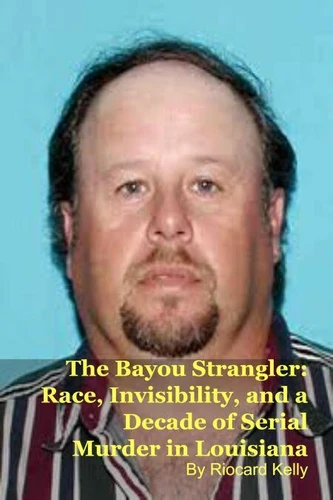
The Bayou Strangler: Race, Invisibility, and a Decade of Serial Murder in Louisiana
Par :Formats :
Disponible dans votre compte client Decitre ou Furet du Nord dès validation de votre commande. Le format ePub est :
- Compatible avec une lecture sur My Vivlio (smartphone, tablette, ordinateur)
- Compatible avec une lecture sur liseuses Vivlio
- Pour les liseuses autres que Vivlio, vous devez utiliser le logiciel Adobe Digital Edition. Non compatible avec la lecture sur les liseuses Kindle, Remarkable et Sony
 , qui est-ce ?
Notre partenaire de plateforme de lecture numérique où vous retrouverez l'ensemble de vos ebooks gratuitement
Pour en savoir plus sur nos ebooks, consultez notre aide en ligne ici
C'est si simple ! Lisez votre ebook avec l'app Vivlio sur votre tablette, mobile ou ordinateur :

- FormatePub
- ISBN8232271176
- EAN9798232271176
- Date de parution03/03/2026
- Protection num.pas de protection
- Infos supplémentairesepub
- ÉditeurDraft2Digital
Résumé
The Bayou Strangler: Race, Invisibility, and a Decade of Serial Murder in LouisianaBetween 1997 and 2006, Ronald Joseph Dominique, the Bayou Strangler, killed at least twenty-three men across six Louisiana parishes while law enforcement failed, repeatedly and catastrophically, to recognize the pattern connecting their deaths. His victims were poor, Black, homeless, and socially marginal: the people Steven Egger called "the less dead, " whose deaths the American justice system is structurally organized to underinvestigate.
The Bayou Strangler is not simply a true crime account of a serial killer. It is a forensic, sociological, and moral reckoning with the institutional architecture that enabled a decade of killing, the parish-based governance structure that prevented cross-jurisdictional pattern recognition, the coroner system that misclassified homicides as accidental drownings, the forensic evidence that waited eight years in an archive for the investigative will to deploy it, and the racial and economic hierarchy that rendered twenty-three men invisible long before Dominique found them.
Drawing on criminological theory, developmental psychology, behavioral forensics, and Louisiana's specific history of racial violence, this book treats every victim as a complete human being, reconstructing their lives with the biographical care the historical record permits, while building a structural argument that demands institutional accountability. Twenty-three men died. One predator killed them.
A society failed them first.
The Bayou Strangler is not simply a true crime account of a serial killer. It is a forensic, sociological, and moral reckoning with the institutional architecture that enabled a decade of killing, the parish-based governance structure that prevented cross-jurisdictional pattern recognition, the coroner system that misclassified homicides as accidental drownings, the forensic evidence that waited eight years in an archive for the investigative will to deploy it, and the racial and economic hierarchy that rendered twenty-three men invisible long before Dominique found them.
Drawing on criminological theory, developmental psychology, behavioral forensics, and Louisiana's specific history of racial violence, this book treats every victim as a complete human being, reconstructing their lives with the biographical care the historical record permits, while building a structural argument that demands institutional accountability. Twenty-three men died. One predator killed them.
A society failed them first.