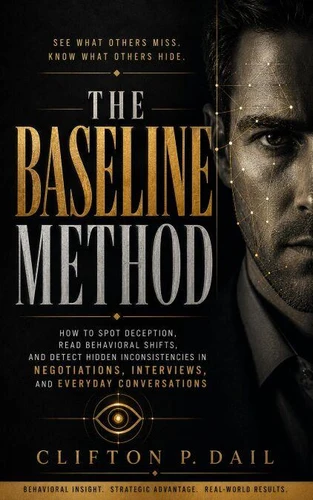
Most people look for lies in the wrong place. They watch for nervous laughter, shaky hands, or broken eye contact-but real deception is rarely that obvious. In professional conversations, the truth often hides in smaller places: a softened commitment, a sudden pause, a shift in posture, a vague answer, or a story that changes when details are requested. The Baseline Method teaches you how to read those shifts with discipline.
Written for negotiators, HR professionals, managers, interviewers, and sharp everyday observers, this practical guide shows you how to establish a person's normal behavior before the pressure rises-then notice what changes when the conversation becomes important. Inside, you'll learn how to:Read behavioral baseline shifts without jumping to false conclusionsSpot inconsistencies between words, voice, body language, and facial expressionsRecognize when vague language hides missing facts or weak commitmentsAsk precise follow-up questions that reveal clarity without sounding accusatorySeparate nervousness from possible deceptionDetect inflated claims in interviews, negotiations, and workplace conversationsUse observation ethically before making decisionsThis is not a book about paranoia, interrogation tricks, or pretending every gesture has one fixed meaning.
It is a field guide to clearer judgment. Because deception does not always look like a lie. Sometimes it looks like a polished answer that avoids the question. Sometimes it sounds like confidence without commitment. Sometimes it appears in the one detail that refuses to stay consistent. If you want to become harder to mislead-and more precise in the conversations that matter-The Baseline Method will teach you how to see the conversation beneath the conversation.
Most people look for lies in the wrong place. They watch for nervous laughter, shaky hands, or broken eye contact-but real deception is rarely that obvious. In professional conversations, the truth often hides in smaller places: a softened commitment, a sudden pause, a shift in posture, a vague answer, or a story that changes when details are requested. The Baseline Method teaches you how to read those shifts with discipline.
Written for negotiators, HR professionals, managers, interviewers, and sharp everyday observers, this practical guide shows you how to establish a person's normal behavior before the pressure rises-then notice what changes when the conversation becomes important. Inside, you'll learn how to:Read behavioral baseline shifts without jumping to false conclusionsSpot inconsistencies between words, voice, body language, and facial expressionsRecognize when vague language hides missing facts or weak commitmentsAsk precise follow-up questions that reveal clarity without sounding accusatorySeparate nervousness from possible deceptionDetect inflated claims in interviews, negotiations, and workplace conversationsUse observation ethically before making decisionsThis is not a book about paranoia, interrogation tricks, or pretending every gesture has one fixed meaning.
It is a field guide to clearer judgment. Because deception does not always look like a lie. Sometimes it looks like a polished answer that avoids the question. Sometimes it sounds like confidence without commitment. Sometimes it appears in the one detail that refuses to stay consistent. If you want to become harder to mislead-and more precise in the conversations that matter-The Baseline Method will teach you how to see the conversation beneath the conversation.


 , qui est-ce ?