
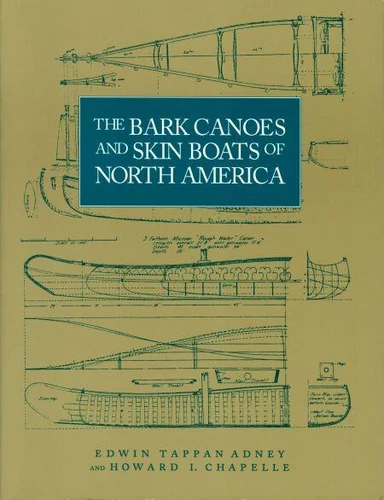
The Bark Canoes and Skin Boats of North America
Par : ,Formats :
Disponible dans votre compte client Decitre ou Furet du Nord dès validation de votre commande. Le format ePub protégé est :
- Compatible avec une lecture sur My Vivlio (smartphone, tablette, ordinateur)
- Compatible avec une lecture sur liseuses Vivlio
- Pour les liseuses autres que Vivlio, vous devez utiliser le logiciel Adobe Digital Edition. Non compatible avec la lecture sur les liseuses Kindle, Remarkable et Sony
- Non compatible avec un achat hors France métropolitaine
 , qui est-ce ?
Notre partenaire de plateforme de lecture numérique où vous retrouverez l'ensemble de vos ebooks gratuitement
Pour en savoir plus sur nos ebooks, consultez notre aide en ligne ici
C'est si simple ! Lisez votre ebook avec l'app Vivlio sur votre tablette, mobile ou ordinateur :

- Nombre de pages256
- FormatePub
- ISBN978-1-58834-522-6
- EAN9781588345226
- Date de parution27/10/2015
- Protection num.Adobe DRM
- Taille60 Mo
- Infos supplémentairesepub
- ÉditeurSmithsonian Books
Résumé
The bark canoes of the North American Indians, particularly those of birchbark, were among the most highly developed manually propelled primitive watercraft. They could be used to carry heavy loads in shallow streams but were light enough to be hauled long distances over land. Built with Stone Age tools from available materials, their design, size, and appearance were varied to suit the many requirements of their users.
Upon arrival in North America, European settlers began using the native-made craft for traveling through the wilderness. Even today, canoes are based on these ancient designs. This fascinating guide combines historical background with instructions for constructing one. Author Edwin Tappan Adney, born in 1868, devoted his life to studying canoes and was practically the sole scholar in his field. His papers and research have been assembled by a curator at the Smithsonian Institution, and illustrated with black-and-white line drawings, diagrams, and photos.
Included here are measurements, detailed drawings, construction methods, and models. The book covers canoes from Newfoundland to the Pacific Ocean, as well as umiaks and kayaks from the Arctic.
Upon arrival in North America, European settlers began using the native-made craft for traveling through the wilderness. Even today, canoes are based on these ancient designs. This fascinating guide combines historical background with instructions for constructing one. Author Edwin Tappan Adney, born in 1868, devoted his life to studying canoes and was practically the sole scholar in his field. His papers and research have been assembled by a curator at the Smithsonian Institution, and illustrated with black-and-white line drawings, diagrams, and photos.
Included here are measurements, detailed drawings, construction methods, and models. The book covers canoes from Newfoundland to the Pacific Ocean, as well as umiaks and kayaks from the Arctic.
The bark canoes of the North American Indians, particularly those of birchbark, were among the most highly developed manually propelled primitive watercraft. They could be used to carry heavy loads in shallow streams but were light enough to be hauled long distances over land. Built with Stone Age tools from available materials, their design, size, and appearance were varied to suit the many requirements of their users.
Upon arrival in North America, European settlers began using the native-made craft for traveling through the wilderness. Even today, canoes are based on these ancient designs. This fascinating guide combines historical background with instructions for constructing one. Author Edwin Tappan Adney, born in 1868, devoted his life to studying canoes and was practically the sole scholar in his field. His papers and research have been assembled by a curator at the Smithsonian Institution, and illustrated with black-and-white line drawings, diagrams, and photos.
Included here are measurements, detailed drawings, construction methods, and models. The book covers canoes from Newfoundland to the Pacific Ocean, as well as umiaks and kayaks from the Arctic.
Upon arrival in North America, European settlers began using the native-made craft for traveling through the wilderness. Even today, canoes are based on these ancient designs. This fascinating guide combines historical background with instructions for constructing one. Author Edwin Tappan Adney, born in 1868, devoted his life to studying canoes and was practically the sole scholar in his field. His papers and research have been assembled by a curator at the Smithsonian Institution, and illustrated with black-and-white line drawings, diagrams, and photos.
Included here are measurements, detailed drawings, construction methods, and models. The book covers canoes from Newfoundland to the Pacific Ocean, as well as umiaks and kayaks from the Arctic.