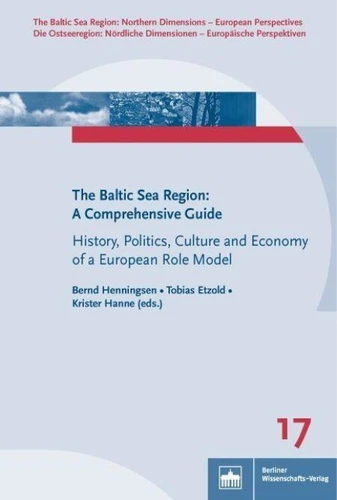
The Baltic Sea Region: A Comprehensive Guide. History, Politics, Culture and Economy of a European Role Model
Par : , ,Formats :
Disponible dans votre compte client Decitre ou Furet du Nord dès validation de votre commande. Le format PDF est :
- Compatible avec une lecture sur My Vivlio (smartphone, tablette, ordinateur)
- Compatible avec une lecture sur liseuses Vivlio
- Pour les liseuses autres que Vivlio, vous devez utiliser le logiciel Adobe Digital Edition. Non compatible avec la lecture sur les liseuses Kindle, Remarkable et Sony
 , qui est-ce ?
Notre partenaire de plateforme de lecture numérique où vous retrouverez l'ensemble de vos ebooks gratuitement
Pour en savoir plus sur nos ebooks, consultez notre aide en ligne ici
C'est si simple ! Lisez votre ebook avec l'app Vivlio sur votre tablette, mobile ou ordinateur :

- Nombre de pages364
- FormatPDF
- ISBN978-3-8305-1748-1
- EAN9783830517481
- Date de parution19/09/2017
- Protection num.Digital Watermarking
- Taille2 Mo
- Infos supplémentairespdf
- ÉditeurBWV
Résumé
The Baltic Sea Region, at the crossroads between East and West, North and South, has long been marked by cultural, ethnical and ideological borders. Overcoming a history of conflict and separation, since the end of the Cold War the countries surrounding the Baltic Sea established widely valued formats of regional cooperation based on shared challenges and opportunities. In comparison with larger regions, however, the Baltic Sea Area is still a blank spot on the global map.
This volume's intention is to fill this spot with colour and facts. It provides students, young researchers and other interested parties with basic knowledge of the region. The volume offers a comprehensive introduction into its history, politics, economy and culture, taking into account the various countries' commonalities and differences. By introducing concepts of regionalism and region-building, as well as analysing the structures of regional cooperation the authors and editors demonstrate the Baltic Sea Area's model function as a European macro-region.
This volume's intention is to fill this spot with colour and facts. It provides students, young researchers and other interested parties with basic knowledge of the region. The volume offers a comprehensive introduction into its history, politics, economy and culture, taking into account the various countries' commonalities and differences. By introducing concepts of regionalism and region-building, as well as analysing the structures of regional cooperation the authors and editors demonstrate the Baltic Sea Area's model function as a European macro-region.
A propos de Bernd Henningsen


34,00 €